
If you’re stepping on your gym’s body fat scale every week to see if your hard work is paying off, you’re probably getting noise, not signal. Bioelectrical impedance analysis (BIA) scales—the ones that send a tiny current through your body—are notoriously unreliable for tracking body fat percentage changes over time. This checklist is for anyone who wants to measure real progress without being fooled by a machine that mostly measures hydration. Completion means you’ll have a reliable, repeatable system that actually reflects changes in your body composition.
Here’s the short version: BIA scales estimate body fat by measuring how easily a small electrical current travels through your body. Fat tissue resists current more than muscle and water. But hydration status, recent exercise, food, and even skin temperature can dramatically change the reading. A 2% drop in hydration can shift your body fat reading by 5 or more percentage points. Even under perfect conditions, consumer BIA scales have error margins of 8–10% compared to DEXA (dual-energy X-ray absorptiometry), the clinical gold standard. That means a reading of 20% body fat could actually be anywhere from 10% to 30%. Small changes—like the 1–2% you might hope to see after a month of training—are completely meaningless on these devices.
So what should you do instead? Use this checklist to replace the unreliable body fat number with metrics that actually track progress: waist-to-height ratio, progress photos, strength benchmarks, and long-term scale weight trends.
Quick Takeaways

- BIA scales measure hydration more than fat—a 2% dehydration can shift readings by 5+ percentage points.
- Consumer BIA error margins are 8–10% vs. DEXA, making small changes meaningless.
- Track waist circumference, progress photos, and performance metrics instead.
- Use scale weight only as a long-term trend, not a daily verdict.
- Consistency in measurement conditions matters more than the tool itself.
Before You Start
This checklist works best if you’re willing to let go of the body fat percentage number from your gym’s scale. You don’t need expensive equipment—just a flexible tape measure, a smartphone camera, a notebook or app, and a bit of patience. Set expectations: you’re looking for trends over weeks and months, not day-to-day changes. Also, decide on a consistent routine: same day of the week, same time of day, similar conditions (e.g., before breakfast, after bathroom, before exercise).
Before you begin, understand that no home method is perfectly accurate. Even DEXA has a margin of error. The goal is not a perfect number; it’s a reliable signal that tells you whether your training and nutrition are moving you in the right direction.
Checklist: Replace the Body Fat Scale with Better Metrics
1. Measure Your Waist-to-Height Ratio
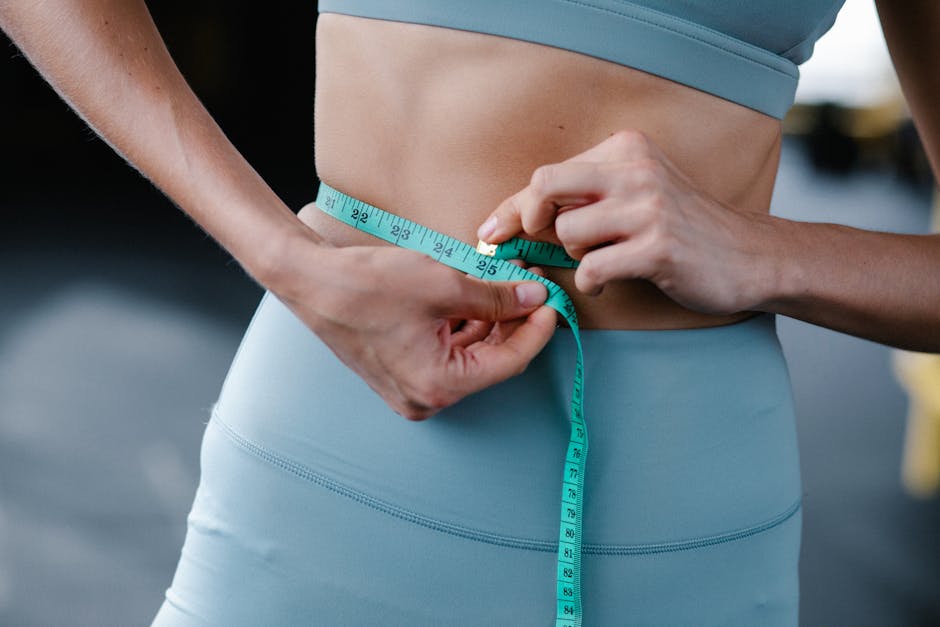
Action: Use a flexible tape measure to measure your waist circumference at the level of your belly button (or the narrowest point, consistently). Then divide that number by your height in the same units. For example, a 32-inch waist and 68-inch height gives a ratio of 0.47.
Why it matters: Waist-to-height ratio is a strong predictor of health risk and a practical proxy for visceral fat. Unlike BIA, it’s not affected by hydration. A ratio under 0.5 is generally considered healthy for most adults. Tracking this monthly gives you a clear, objective trend.
How to verify: Measure twice and average. Keep a log. If your ratio decreases over 4–8 weeks while your training stays consistent, you’re losing fat—regardless of what the scale says.
2. Take Standardized Progress Photos
Action: Once every 2–4 weeks, take photos from the front, side, and back in the same lighting, same time of day, and same clothing (or lack thereof). Use a tripod or ask a friend.
Why it matters: Photos capture changes in muscle definition, posture, and overall shape that the scale and tape measure can miss. They also provide a visual record that can be more motivating than a number.
How to verify: Compare photos side by side after 8–12 weeks. Look for changes in waist taper, shoulder-to-waist ratio, and muscle tone. If you see differences, you’re making progress.
3. Track Strength Benchmarks
Action: Choose 3–5 compound lifts (e.g., squat, deadlift, bench press, pull-up, overhead press) and record the weight and reps you can do with good form. Re-test every 4 weeks.
Why it matters: If you’re in a calorie deficit or recomposition phase, maintaining or increasing strength is a strong signal that you’re losing fat and preserving muscle. BIA can’t tell you that.
How to verify: Use a training log. If your estimated 1-rep max or reps at a given weight go up, or stay the same while your waist shrinks, you’re on track.
4. Monitor How Your Clothes Fit
Action: Pick a pair of non-stretch jeans or a fitted shirt and try it on every 2 weeks. Note how it feels around the waist, chest, and arms.
Why it matters: Fit is a real-world indicator of body composition changes. It’s less precise than a tape measure but more immediate and intuitive.
How to verify: If a previously tight waistband becomes comfortable, or a shirt fits better across the shoulders, you’re changing shape.
5. Use Scale Weight as a Long-Term Trend Only
Action: Weigh yourself under consistent conditions (morning, after bathroom, before food/drink) no more than 2–3 times per week. Record the numbers and calculate a 7-day average.
Why it matters: Daily weight fluctuates due to water, sodium, carbs, and hormones. The trend over 4–6 weeks is what matters. A loss of 0.5–1% of body weight per week is a reasonable goal for fat loss.
How to verify: Plot your weekly averages on a graph. If the trend line is moving in the desired direction, you’re making progress—even if individual days bounce around.
Checklist: Build a Consistent Tracking Routine
6. Pick a Fixed Day and Time
Action: Choose one day per week (e.g., Sunday morning) for all measurements: waist, photos, weight. Do it at the same time and under the same conditions.
Why it matters: Consistency reduces noise. If you measure waist after a big meal one week and fasted the next, the data is useless.
How to verify: Set a recurring reminder on your phone. After a month, review your log to ensure all measurements were taken under similar conditions.
7. Record Data in One Place
Action: Use a notebook, spreadsheet, or app to log your waist measurement, weight, strength benchmarks, and notes on sleep, stress, and nutrition.
Why it matters: Context helps you interpret changes. A sudden waist increase might be bloating, not fat gain. A strength drop might be poor sleep.
How to verify: After 8 weeks, look for correlations. For example, weeks with better sleep often show better strength and lower waist measurements.
8. Review Trends Monthly, Not Daily
Action: Set a monthly review date to look at your data. Calculate changes in waist-to-height ratio, average weight, and key lifts.
Why it matters: Body composition changes slowly. Monthly reviews give you enough data to see real trends without overreacting to daily fluctuations.
How to verify: If your waist-to-height ratio decreased by 0.01–0.02 and your strength held steady or improved, you’re making excellent progress.
Checklist: Avoid Common Tracking Mistakes
9. Don’t Chase Daily Fluctuations
Action: Ignore any single-day change in weight or BIA reading. Focus only on 4-week trends.
Why it matters: A salty meal can add 2–3 pounds of water weight overnight. A hard workout can cause inflammation and water retention. These are not fat changes.
How to verify: If you feel tempted to change your diet based on one day’s number, wait 7 days and re-measure. The number will likely be different.
10. Don’t Compare Yourself to Others
Action: Track your own baseline and progress. Avoid comparing your BIA reading or waist measurement to a friend’s or a fitness influencer’s.
Why it matters: Body composition is highly individual. Genetics, height, and training history all affect what’s normal for you.
How to verify: Keep a personal log. After 3 months, compare your current numbers to your own starting numbers—not anyone else’s.
11. Don’t Ignore Non-Scale Victories
Action: Write down non-scale victories: better sleep, more energy, improved mood, clothes fitting better, faster recovery, or hitting a new personal record.
Why it matters: These are often the first signs of progress and can keep you motivated when the scale is stubborn.
How to verify: Review your list monthly. If you have 3+ non-scale victories, you’re winning regardless of the body fat percentage.
Next Action: What to Do After Completing This Checklist
Once you’ve implemented these items, you’ll have a reliable system for tracking body composition without relying on a gym’s BIA scale. Your next step is to commit to a 12-week cycle. Take your baseline measurements today, then follow your weekly routine. At the end of 12 weeks, review your waist-to-height ratio, progress photos, strength benchmarks, and average weight trend. If you’ve seen improvements in at least two of those metrics, you’re making real progress—no matter what the body fat scale says.
If you want to go further, consider working with a coach who can help you interpret your data and adjust your training and nutrition. But even on your own, these checklist items will keep you focused on what actually matters.
Frequently Asked Questions
Are smart scales ever useful?
Smart scales can be useful for tracking weight trends if you ignore the body fat percentage. Some higher-end models with multiple electrodes (like foot-to-foot and hand-to-hand) are slightly more accurate, but they still have significant error margins and are highly sensitive to hydration. For body fat tracking, they’re not reliable.
What is the most accurate way to measure body fat at home?
There’s no perfectly accurate home method. The most practical approach is to use a combination of waist-to-height ratio, progress photos, and strength benchmarks. If you want a more precise body fat measurement, look for a DEXA scan or hydrostatic weighing at a local clinic—but even those have some error and are best used sparingly (e.g., every 3–6 months).
How often should I weigh myself?
Weigh yourself 2–3 times per week under consistent conditions and track the 7-day average. Daily weighing can be informative if you’re comfortable with fluctuations, but the trend is what matters. If daily weighing stresses you out, weigh once a week.
Can I use a gym’s BIA scale if I’m consistent?
Even with perfect consistency, the error margin is too large to detect meaningful changes. A 2% dehydration can shift the reading by 5+ percentage points, which is larger than the fat loss you might achieve in a month. You can use it as a rough baseline, but don’t rely on it for progress tracking.
Now you have a complete checklist to ditch the unreliable body fat scale and track progress with confidence. Start today, stay consistent, and let the real data guide your journey.