The Great Warm-Up Delusion: Why Heat Isn't Enough
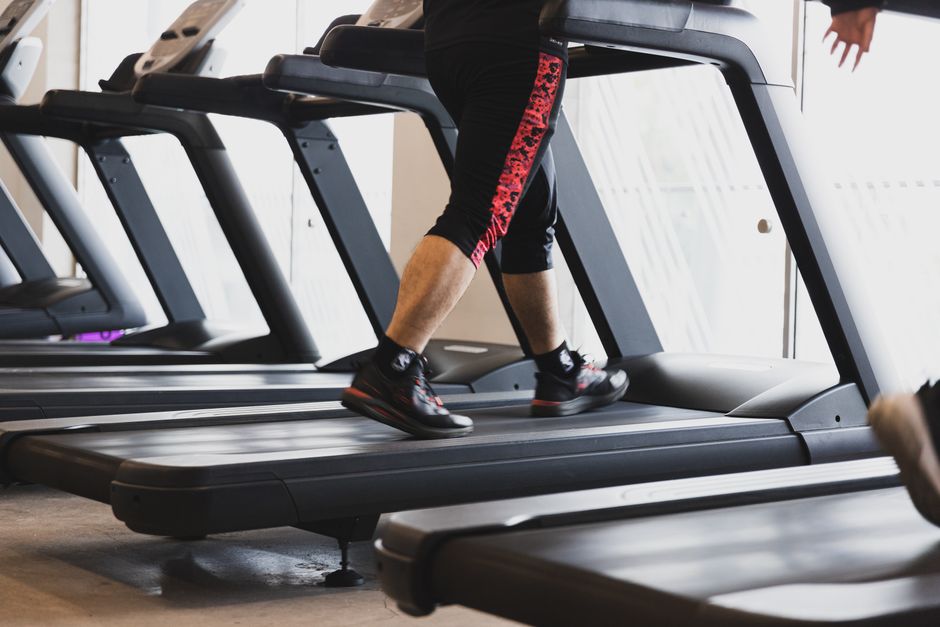
I see it every single day at 5:30 PM. A dedicated trainee walks into the gym after eight hours of sitting at a desk, drops their bag, and heads straight for the treadmill. They spend five minutes in a light, rhythmic shuffle, maybe breaking a tiny bead of sweat, and then they head straight to the squat rack to move 300 pounds. This is the 'commodity' warm-up, and it is the single biggest reason why your progress has stalled and your lower back feels like a coiled spring.
My thesis is simple: The standard five-minute treadmill walk is not just a waste of time; it is actively sabotaging your lifts. While you might be increasing your core temperature, you are doing absolutely nothing to address the 'sedentary compression' your body has endured all day. You are attempting to build a high-performance engine on a chassis that is still locked in a seated position. To truly perform, we must move beyond systemic thermal warming and embrace joint-specific neural priming.
In this article, I will break down the neuromuscular disconnect caused by modern office work and provide a high-level "Reset and Recruit" protocol that will transform your training from a struggle against your own body into a display of coordinated power.
Quick Takeaways: Rethinking Your Pre-Lift Routine
- Sweat is not readiness: Raising body temperature (thermal warming) is different from preparing your nervous system (neural priming).
- The Desk Effect: Eight hours of sitting creates "Sedentary Compression," leading to glute amnesia and a locked thoracic spine.
- The Treadmill Trap: Steady-state walking is too low-intensity to recruit high-threshold motor units needed for heavy resistance training.
- Reset & Recruit: A 3-step protocol focusing on mobility, activation, and CNS potentiation is the superior alternative.
Systemic Thermal Warming vs. Joint-Specific Neural Activation
We have been told for decades that the goal of a warm-up is to "get the blood flowing." While increased blood flow and tissue temperature are beneficial for elasticity, they are only the baseline of physiological readiness. For someone engaged in heavy resistance training, the bottleneck isn't usually cold muscles; it’s a sleepy nervous system.
When you walk on a treadmill, you are performing a low-intensity, repetitive movement that requires minimal coordination or motor unit recruitment. Your brain remains in a "low-power mode." However, when you step under a heavy barbell, you need your central nervous system (CNS) to fire at maximum frequency. There is a massive gap between the neural demands of walking and the neural demands of a heavy snatch or deadlift. A treadmill walk does nothing to bridge that gap.
Furthermore, systemic heat does not equal joint integrity. You can be "warm" and still have a pelvis that is stuck in an anterior tilt or a thoracic spine that is as rigid as a 2x4. True neural activation ensures that the right muscles are firing at the right time to stabilize the joints before the load is applied. Without this, you are simply putting more force into a dysfunctional system.
The Silent Killer: Sedentary Compression and the Office Worker
If you work a desk job, you are suffering from what I call "Sedentary Compression." For 40+ hours a week, your hip flexors are in a shortened state, your glutes are being physically flattened and neurologically inhibited, and your upper back is rounded forward over a keyboard. This isn't just a posture issue; it's a mechanical disadvantage that changes how your brain communicates with your muscles.
The Reality of Glute Amnesia
The term "glute amnesia" sounds like a joke, but the clinical reality of reciprocal inhibition is no laughing matter. When your hip flexors are constantly tight from sitting, they send a signal to your brain to "turn off" the glutes. This means that when you go to squat, your primary power movers—the glutes—are essentially on vacation. Your lower back (erector spinae) and hamstrings are then forced to pick up the slack, leading to the chronic "tight back" feeling most lifters experience.
Thoracic Rigidity and Shoulder Health
Sitting also kills thoracic mobility. Your mid-back is designed to move, but the desk environment locks it into flexion. When you try to press overhead or even hold a back squat position with a rigid thoracic spine, your shoulders and lumbar spine have to compensate. A five-minute walk on the treadmill does exactly zero to unlock your mid-back or re-educate your glutes to fire. You are walking into your first set with a body that is still technically "sitting down."
Why Walking Fails to Fix the Sitting Problem
I am often asked, "But isn't walking better than nothing?" Perhaps. But in the context of high-level performance, "better than nothing" is a failing grade. Steady-state walking is a linear, sagittal-plane movement. It doesn't challenge your lateral stability, it doesn't rotate your spine, and it doesn't require any significant force production.
When we sit all day, our tissues undergo creep—a slow deformation under constant stress. To reverse this, we need targeted, multi-planar movements that provide a stimulus the body can't ignore. Walking is simply too familiar and too low-threshold to force the nervous system to recalibrate. You need to tell your brain that the workday is over and the "battle" has begun. A stroll on a motorized belt doesn't send that message.
The 'Reset and Recruit' Protocol: A 3-Step Alternative
If you want to maximize force production and protect your joints, you need a protocol that addresses the specific damage of the desk and prepares the CNS for intensity. I recommend the following three-step process, which takes no longer than 10 minutes but offers a 10x return on investment compared to the treadmill.
Step 1: Mobilize the Thoracic Spine and Hips (The Reset)
First, we must address the physical blockages. Instead of walking, spend two minutes on movements that reverse sedentary compression. My go-to is the 90/90 Hip Switch combined with Thoracic Extensions on a foam roller or Cat-Cow variations. These movements tell the mechanoreceptors in your joints that it is time to move through a full range of motion. You are physically "resetting" the length-tension relationships in your muscles.
Step 2: Wake Up the Posterior Chain (The Recruit)
Now that the joints are mobile, we need to turn the lights on. To combat glute amnesia, perform two sets of 15 Glute Bridges with a 3-second pause at the top, squeezing as hard as possible. Follow this with a Bird-Dog or a Dead Bug to engage the anterior core. The goal here is not fatigue; it is connection. You are establishing a neural link between your brain and the muscles that will protect your spine during your heavy sets.
Step 3: Central Nervous System Potentiation (The Prime)
The final step is to wake up the CNS. This is where you bridge the gap to high-intensity training. Perform 3-5 reps of an explosive movement, such as Box Jumps, Kettlebell Swings, or Medicine Ball Slams. These movements require high-threshold motor unit recruitment. They tell your brain: "We are moving fast and heavy now." This "primes" the pump, allowing your first working set of squats or presses to feel lighter and more stable.
Addressing the Counterargument: "But I Just Need to Get Sweaty"
Many old-school lifters argue that the treadmill is essential for "breaking a sweat" and that they feel "stiff" without it. I don't disagree that a higher core temperature is good. However, if you perform the "Reset and Recruit" protocol with focus and intent, you will find that you break a sweat anyway—but it will be a sweat accompanied by better movement quality.
The feeling of "stiffness" is often not a lack of heat, but a lack of neural safety. When your brain senses that your joints are unstable (because your glutes or core aren't firing), it creates tension as a protective mechanism. By properly activating your stabilizers, you often find that your "stiffness" vanishes instantly, far more effectively than it would after 20 minutes of jogging.
Practical Implications for Your Training
I challenge you to ditch the treadmill for the next two weeks. Instead, spend that same 10 minutes on the gym floor doing targeted mobility and neural priming. Pay close attention to your first two sets of your primary lift. You will likely notice that the bar moves faster, your joints feel "greased," and the nagging lower back ache that usually haunts your squats is significantly diminished.
This isn't just about injury prevention; it's about performance. A primed nervous system can recruit more muscle fibers, which means more weight on the bar and more stimulus for growth. You are essentially unlocking "free" strength that was previously being suppressed by your sedentary lifestyle.
Conclusion: Stop Training Like a Commodity
The treadmill walk is the "commodity" advice of the fitness world—it’s easy to give, easy to do, and provides very little value. If you are serious about your resistance training, you must treat your warm-up with the same intentionality as your work sets. You are an athlete, even if you spend eight hours a day in a cubicle. Your warm-up should reflect that.
Stop walking in circles and start priming your system. Reset your joints, recruit your dormant muscles, and prime your nervous system for the load ahead. Your body, your lifting total, and your long-term health will thank you.
"Don't just get warm; get ready. Heat is a byproduct of movement, but readiness is a product of intent."