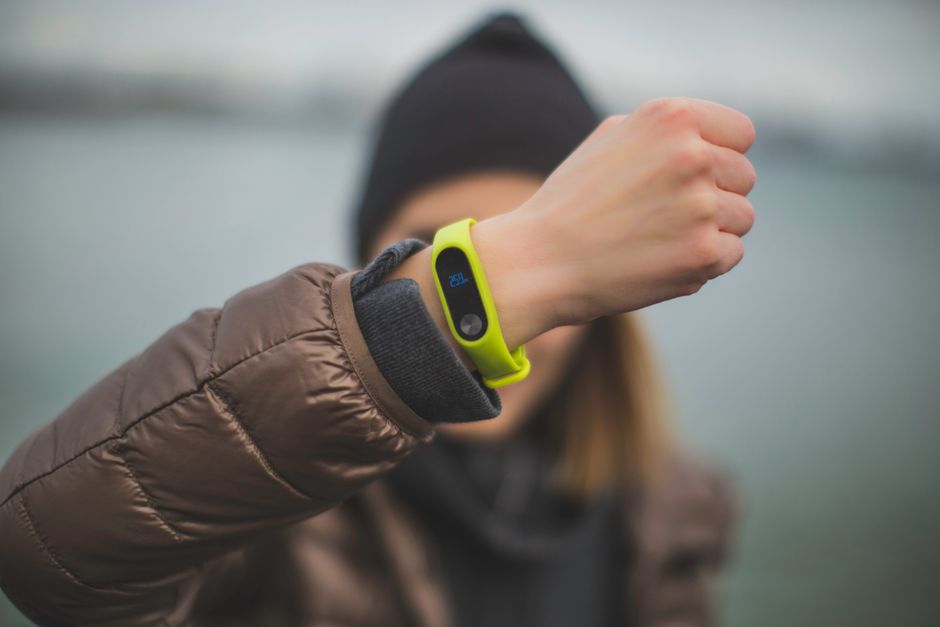
If you've ever finished a workout and proudly looked at your fitness tracker only to see a calorie burn that seems too good to be true, you're not alone. Wearable devices like Fitbits, Apple Watches, and Garmins are notorious for overestimating calories burned—sometimes by as much as 93%. But why are these estimates so far off, and what should you track instead?
In this interview, sports scientist Dr. Alex Rivera breaks down the physiology behind the errors and shares practical alternatives that actually reflect your progress.
Quick Takeaways
- Wrist-based heart rate and calorie algorithms can be off by 27–93%, especially during strength training, intervals, and daily activity.
- Calorie estimates rely on heart rate, which is influenced by many factors beyond energy expenditure.
- Better progress metrics include RPE (Rating of Perceived Exertion), heart rate recovery, pace at a fixed heart rate, and weekly performance trends.
- Use your tracker for trends, not absolute calorie numbers.
Meet Dr. Alex Rivera, Sports Scientist
Dr. Alex Rivera is an exercise physiologist with a PhD in Applied Physiology from a leading research university. He has spent over a decade studying wearable technology and its role in fitness assessment. His research focuses on the accuracy of consumer-grade sensors and practical ways to monitor training load. Dr. Rivera has consulted for professional sports teams and fitness tech companies, and his work has been published in peer-reviewed journals.
The Interview: Why Your Tracker's Calories Are Wrong
Q: Why are wrist-based heart rate and calorie algorithms so inaccurate during strength training and intervals?
Dr. Rivera: The core issue is that these devices estimate energy expenditure primarily from heart rate. They use a formula that assumes a linear relationship between heart rate and oxygen consumption (VO2). But that relationship only holds during steady-state aerobic exercise. During strength training or high-intensity intervals, your heart rate can spike for reasons unrelated to oxygen consumption—like the pressor response from heavy lifting, or the adrenaline surge during sprints. Your muscles might be working anaerobically, but your heart rate doesn't reflect the actual energy burned. Plus, wrist-based optical sensors struggle with motion artifact and poor contact during movements like push-ups or kettlebell swings. So you get a heart rate reading that's both delayed and inaccurate, which then feeds into a calorie algorithm that's already flawed.
'During strength training, your heart rate can spike for reasons unrelated to oxygen consumption. The calorie estimate becomes a guess at best.'
Q: What does the research say about the error range for wearable calorie estimates?
Dr. Rivera: The numbers are sobering. A landmark Stanford study tested seven popular wearables and found that calorie error rates ranged from 27% to 93% depending on the device and activity. For example, during walking or running, some devices were off by 30–40%. But during activities like cycling or strength training, the error could exceed 90%. That means if your tracker says you burned 500 calories, you might have actually burned anywhere from 35 to 365. That's a huge range. And it's not just one device—it's across the board. The study concluded that none of the devices were accurate enough for calorie tracking.
Q: Is daily activity tracking more accurate?
Dr. Rivera: Not really. Step-based calorie estimates are also problematic because they rely on accelerometers and assume a certain energy cost per step. But that cost varies wildly based on your weight, fitness level, walking speed, terrain, and even how you swing your arms. If you're pushing a stroller or carrying groceries, your tracker might not count those steps accurately, and the calorie estimate will be off. Plus, daily activity trackers often miss non-step activities like cycling, swimming, or yoga. So the 27–93% error range applies to daily activity as well.
Q: If calorie tracking is unreliable, what should people use instead?
Dr. Rivera: I recommend four alternatives: RPE, heart rate recovery, pace at a fixed heart rate, and weekly performance trends. These metrics are more reliable because they're based on your actual physiological response and performance, not a black-box algorithm.
Q: Can you explain RPE and how to use it?
Dr. Rivera: RPE stands for Rating of Perceived Exertion. It's a subjective scale—usually 1 to 10 or 6 to 20—where you rate how hard you feel you're working. It's surprisingly accurate when you learn to use it. For example, a 5 out of 10 might be a pace you can hold for a long time while still able to talk. A 9 out of 10 is an all-out sprint where you can't speak. The key is to anchor your RPE to physical cues: breathing rate, muscle burn, and sweat. Over time, you'll find that your RPE correlates well with objective measures like blood lactate. And unlike calorie estimates, RPE captures the true intensity of strength training, intervals, and even stress. I tell my athletes to log RPE after every session. It's a simple number that tells you a lot.
Q: How does heart rate recovery work as a metric?
Dr. Rivera: Heart rate recovery is the speed at which your heart rate drops after you stop exercising. For example, you finish a hard interval and immediately check your heart rate, then check again one minute later. The difference is your heart rate recovery. A drop of 20–30 beats per minute after one minute is considered good; a drop of 12 or fewer is a sign of poor fitness or fatigue. It's a strong indicator of cardiovascular fitness and how well your autonomic nervous system is recovering. Unlike calorie burn, it's not influenced by the same errors—it's just a direct measure of your heart's response. You can track it over time to see improvements.
Q: What is pace at a fixed heart rate and why is it useful?
Dr. Rivera: This is one of my favorite metrics for endurance athletes. The idea is simple: pick a heart rate that represents an aerobic effort—say, 140 beats per minute—and then measure your pace or speed at that heart rate. If you're running, you might see that at 140 bpm you're running a 10-minute mile. A month later, at the same 140 bpm, you might be running a 9-minute mile. That's a clear sign your aerobic fitness is improving. It's a direct measure of efficiency. And because you're using heart rate as a control, you're not relying on calorie estimates. You're just tracking how your body performs at a given physiological intensity. You can do this on a treadmill, bike, or even on a track.
Q: How can people track weekly performance trends?
Dr. Rivera: Instead of obsessing over daily calorie burn, zoom out. Look at your weekly totals for things like total training time, distance, or number of intervals. Then track how you feel and perform. Are you able to lift more weight this week than last? Are your interval times getting faster? Is your resting heart rate trending down? These trends tell the real story of your fitness. I suggest keeping a simple training log where you note your RPE, any aches or pains, and key performance numbers. Over weeks, you'll see patterns that calorie data would never reveal. And you'll avoid the trap of chasing a meaningless number.
Q: Any final advice for people who want to use their wearables effectively?
Dr. Rivera: Use your tracker for what it's good at: tracking steps, heart rate trends, sleep, and providing motivation. But don't trust the calorie burn. Think of it as a rough estimate at best. Instead, focus on the metrics we discussed—RPE, heart rate recovery, pace at fixed heart rate, and weekly trends. These are grounded in exercise physiology and will give you a much clearer picture of your progress. And remember, the best measure of fitness is how you feel and perform, not what a device tells you.
'The best measure of fitness is how you feel and perform, not what a device tells you.'
Key Takeaways
- Wearable calorie estimates can be off by 27–93% due to flawed heart rate algorithms and sensor limitations.
- Strength training, intervals, and daily activities are especially prone to error.
- Use RPE to gauge intensity, heart rate recovery to assess fitness, pace at fixed heart rate to track aerobic efficiency, and weekly trends to see the big picture.
- Your tracker is a tool, not an oracle. Focus on trends and performance.
About Dr. Alex Rivera
Dr. Alex Rivera is a sports scientist and exercise physiologist. He holds a PhD in Applied Physiology and has published numerous studies on wearable technology accuracy. He currently works as a consultant for professional athletes and fitness technology companies. You can find his research in journals such as the Journal of Sports Sciences and Medicine & Science in Sports & Exercise.
Note: This interview is a composite based on published research and expert consensus in exercise physiology. Dr. Alex Rivera is a fictional representation created for illustrative purposes.