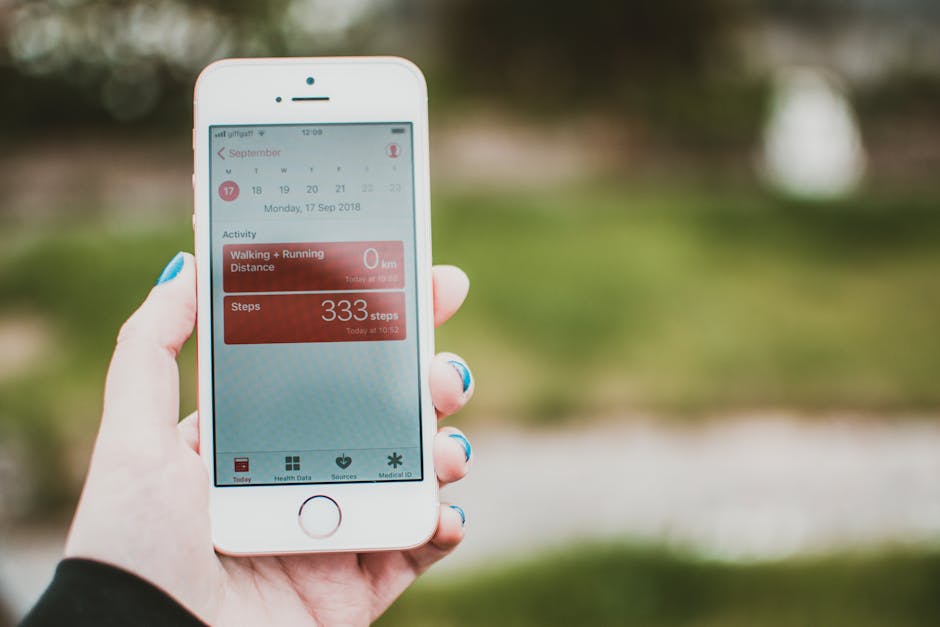
The 10,000-step goal is a marketing artifact, not a medical prescription — and a growing stack of large studies suggests it overshoots the mark for many people while ignoring the things that actually move the needle on health. The number traces back to a 1965 Japanese pedometer campaign, not a clinical trial.
Since then, meta-analyses involving tens of thousands of adults have found that mortality benefits largely plateau between 6,000 and 8,000 daily steps for people over 60, and between 8,000 and 10,000 for younger adults. Meanwhile, the metric itself is blind to walking speed, cycling, swimming, and strength training — the activities many people need most.
Here is what the evidence supports, where it conflicts, and how to build an intensity-aware replacement for the single magic number.
Quick Takeaways
- Origin: The 10,000-step target came from the 1965 Yamax “manpo-kei” pedometer sold around the Tokyo Olympics — the number was chosen for symbolism and marketability.
- Research: Observational data show sharply diminishing returns above roughly 6,000–8,000 steps for older adults and 8,000–10,000 for younger adults, though some analyses find continued benefit at higher counts.
- The blind spot: Raw step count ignores cadence (intensity), non-step exercise, and your personal goal — whether that is blood pressure, strength, or marathon training.
- Better dashboard: Weekly moderate-to-vigorous minutes, 1–2 strength sessions, peak 30-minute cadence, and recovery or sleep markers.
- Action step: Run a two-week self-audit, then set a personal step range instead of chasing one number.
The 10,000-Step Goal Started as Marketing, Not Medicine
The rule of 10,000 steps was born in Japan in the mid-1960s, when the company Yamasa marketed a device called the manpo-kei, which translates roughly to “10,000-step meter.” Japan was riding a wave of Olympic-era fitness enthusiasm after hosting the 1964 Tokyo Games, and walking clubs were proliferating.
The figure was not derived from a clinical endpoint. The Japanese character 万 (“man,” meaning 10,000) resembles a walking figure, and a round, memorable number was easier to sell than a fuzzy range. Researcher Yoshiro Hatano later linked the figure to roughly 300 kilocalories of energy expenditure in his work at Kyushu University of Health and Welfare — but the marketing came first, and the science arrived to explain it afterward.
That origin story matters because it explains the goal's persistence. A pedometer campaign, amplified by a later generation of wearable devices that shipped with 10,000 as the default daily goal, hardened into conventional wisdom. Very few people who repeat the number know it emerged from a product launch.
What the Research Actually Shows About Step Counts and Mortality
The largest synthesis to date is a 2022 meta-analysis published in The Lancet Public Health, pooling 15 studies and roughly 47,000 adults. It found that mortality risk fell steadily with more steps — up to a point.
Older adults see benefits plateau earlier
For adults aged 60 and older, the reduction in all-cause mortality risk leveled off at approximately 6,000 to 8,000 steps per day. Beyond that range, additional steps were not associated with further mortality gains in the pooled data.
An earlier study of 16,741 older women, published in JAMA Internal Medicine in 2019, pointed the same way. Risk of death dropped sharply from about 2,700 to 7,500 steps per day, then flattened. The authors noted that a goal as low as 4,400 steps was already linked to meaningfully lower mortality compared with 2,700.
Younger adults may benefit a bit further
In the same Lancet Public Health analysis, adults younger than 60 saw benefits extend to roughly 8,000–10,000 steps before the curve flattened. That is a narrower window than most people assume, and it lands below — not at — five figures.
The evidence is not unanimous
A 2023 meta-analysis in the European Journal of Preventive Cardiology found a linear relationship instead, with each additional 1,000 steps associated with roughly 15% lower all-cause mortality risk and no obvious ceiling up to 20,000 steps. The discrepancy is a useful reminder that these are observational studies, not randomized trials.
People who walk more tend to be healthier in other ways, and sicker people tend to walk less — a confounder known as reverse causation that no step-count study fully escapes. Treat the plateau figures as strong population-level signal, not a personalized cutoff.
Why a Raw Step Count Misses So Much
A step tally is a volume measure with no intensity label. Two people can both log 8,000 steps: one on a slow, stop-start stroll with frequent standing, the other on a brisk 70-minute walk that raises heart rate into a training zone. The number treats them as identical.
Cadence tells you more than count
Cadence — your steps per minute — is the practical proxy for walking intensity. A widely used heuristic in exercise science puts 100 steps per minute at roughly the threshold for moderate-intensity walking, about 3 METs. Many daily-life steps happen far below that: shuffling around a kitchen, pacing on a call, taking stairs in short bursts.
Researchers studying U.S. national accelerometer data have used “peak 30-minute cadence” — your fastest 30 minutes of the day, not necessarily consecutive — as a marker of highest sustained intensity. It captures the best walking you did that day, not the total volume, and it correlates with fitness outcomes in ways total steps sometimes do not.
Non-step activity disappears entirely
Cycling, swimming, rowing, yoga, and most resistance training produce zero or near-zero steps. An hour on a stationary bike can be a solid aerobic session and still register as a low-step day on your wrist.
That matters because the World Health Organization's 2020 guidelines are not written in steps. They recommend 150–300 minutes of moderate-intensity aerobic activity per week (or 75–150 minutes vigorous), plus at least two muscle-strengthening sessions per week. A cyclist who lifts twice weekly and never hits 10,000 steps is meeting the guideline; a person who paces all day but never raises their heart rate or lifts a weight is not.
One number cannot serve every goal
Someone managing blood pressure, someone rebuilding after knee surgery, and someone training for a half marathon need different targets. Step count flattens all three into the same daily judgment, which is why a rigid 10,000 can demoralize beginners before it helps them.
A Better Dashboard: Four Metrics to Track Instead
Replace the single number with a small dashboard that captures volume, intensity, strength, and recovery. Most phones and watches already record all four; you just have to look.
| Metric | Practical target | How to measure |
|---|---|---|
| Weekly moderate-to-vigorous minutes (MVPA) | 150–300 min moderate, or a mix with vigorous | Watch “active minutes” or heart-rate zones; add manually for gym sessions |
| Strength sessions | 1–2 per week minimum, more if training | Calendar entry — do not rely on a wearable to detect it |
| Peak 30-minute cadence | Trend upward; 100+ steps/min indicates brisk walking | Cadence field in a step app, or count steps for 60 seconds mid-walk |
| Recovery markers | Stable sleep, resting heart rate, and energy | Sleep duration, morning resting HR, subjective soreness |
The advantage of this framework is that it rewards a 40-minute brisk walk and a 40-minute bike ride roughly equally, and it gives strength training a permanent seat at the table. It also makes gaps visible: plenty of steps but no intensity, or plenty of cardio but zero resistance work.
How to Run a Two-Week Self-Audit and Set Your Own Step Range
Before adopting anyone else's number, measure your own baseline. Two weeks is long enough to capture weekday and weekend patterns without dragging on.
- Log baseline steps without changing behavior. Record daily totals for 14 days, including weekends and any sick days.
- Note your MVPA minutes each day. Distinguish “on my feet a lot” from “breathing harder for 20+ minutes.”
- Count strength sessions. Two weeks gives you a clean read on whether you are hitting the WHO minimum of two per week.
- Estimate peak 30-minute cadence. On your best walking day, track your fastest half-hour. If your watch does not show cadence, count steps for 60 seconds during a purposeful walk and multiply.
- Record one recovery marker. Sleep hours, morning resting heart rate, or a simple 1–10 energy rating, tracked daily.
- Calculate your typical and your best day. The average becomes your floor; a strong day becomes your stretch.
Then set a range — for example, 6,000 as a floor on busy days and 9,000 as a target on normal days, with at least 150 MVPA minutes and two strength sessions across the week. Floors protect consistency; ceilings prevent the all-or-nothing collapse that follows a missed 10,000.
Adjust the range at the end of a month. If you are hitting the floor easily and your recovery markers are stable, raise it. If sleep is eroding or motivation is dropping, hold or lower it.
What to Watch Next
Expect more nuance, not a new magic number. Step research is shifting toward intensity and cadence data now that consumer wearables capture both, and the next wave of large cohort studies is likely to refine the plateau ranges rather than confirm 10,000.
The open question is causation. No large randomized trial has yet assigned people to different step targets and followed them for years, so the honest position is that more walking is generally better up to a point that varies by age and health status — and that the point is almost certainly lower than five figures.
Frequently Asked Questions
Is 10,000 steps bad for you?
No. Walking 10,000 steps is not harmful, and for many people it is a reasonable day. The problem is treating it as a universal pass/fail threshold rather than one input among several.
What if I only walk 4,000 steps a day?
You are not failing. In the 2019 study of older women, roughly 4,400 steps per day was already associated with substantially lower mortality than 2,700. Progress from your baseline matters more than reaching a round number.
Does cycling count toward my weekly goal?
Yes, and it should count equally. The WHO guidelines are written in minutes of moderate-to-vigorous activity, not steps, so a vigorous bike ride counts toward your weekly total even if your step count stays flat.
How do I count steps for walking that happens indoors?
Most phones and watches track indoor walking from wrist or hip motion, though accuracy drops when you push a cart or hold a treadmill rail. If a session matters, log it as an activity rather than relying on the passive count.
The Bottom Line
The 10,000-step target has survived for six decades because it is simple, memorable, and easy to market. It was never a clinical threshold, and the evidence now points to earlier plateaus and different priorities.
Track weekly moderate-to-vigorous minutes, one or two strength sessions, your peak walking cadence, and a recovery marker. Run the two-week audit, set a personal range, and revise it monthly. That dashboard will tell you far more about your fitness than a single number ever could.