A 10-minute walk started within roughly 15 to 30 minutes of finishing a meal is one of the few genuinely well-supported "hacks" for flattening post-meal blood sugar. It works for two reasons: the timing lines up with the glucose rise from that specific meal, and contracting muscle pulls sugar out of the bloodstream through a pathway that doesn't need extra insulin.
The problem is that "walk more" doesn't capture any of that. Timing, pace, and duration all change the result, and there are people who should not start this without talking to a clinician first. Below is the practical version — what the evidence shows, the exact protocol, and where the caveats are.
Quick Takeaways

- Start within 15–30 minutes of your first bite, not immediately after eating and not an hour later.
- Walk 10–15 minutes at a brisk but conversational pace — you can talk in full sentences but not sing.
- Post-meal timing appears to matter more than total minutes. In a randomized crossover trial in type 2 diabetes, walking after meals lowered postprandial glucose more than the same amount of walking done at other times of day.
- The evening meal often produces the biggest effect, because it tends to be the largest and insulin sensitivity is typically lower later in the day.
- If you use insulin or a sulfonylurea, treat this as a medication-adjacent intervention. Check glucose, and ask your prescriber whether doses need adjusting.
- Can't walk? Seated marching, calf raises, or a stationary bike hit the same muscle-contraction mechanism.
Why Post-Meal Timing Matters More Than You'd Think
Blood glucose after a meal follows a fairly predictable curve. It starts rising within 10 to 15 minutes of eating, peaks somewhere between 30 and 60 minutes for most mixed meals, and then declines. A high-fat or high-fiber meal pushes that peak later; a liquid or highly refined carbohydrate meal pulls it earlier.
Walking at minute 20 puts active muscle directly in the path of that rising curve. Walking at minute 90 mostly misses it. Same distance, same calories burned, different blood sugar result.
Muscle contraction moves glucose without insulin
When muscle contracts, it translocates glucose transporter proteins (GLUT4) to the cell surface through an AMPK- and calcium-dependent pathway. This is often called contraction-mediated glucose uptake, and it works even when insulin signaling is impaired — which is precisely the situation in insulin resistance and type 2 diabetes.
This is why a 10-minute walk is not just "a little exercise." It's an acute pharmacological-like effect on glucose disposal that starts within minutes of walking and fades over the following hours. Standing still doesn't trigger it. Sitting doesn't trigger it.
What the Research Actually Shows
The evidence is stronger for timing than for any specific step count, and it comes from three overlapping lines of research: timing-comparison trials, sitting-break studies, and CGM studies.
The trial that shifted the advice
One of the most cited studies on this topic, published in Diabetologia in 2016, randomized adults with type 2 diabetes to two 14-day arms: 30 minutes of walking after meals, versus 30 minutes of walking at any time of day. Both arms walked the same total amount. The post-meal timing arm produced lower postprandial glucose, with the clearest difference after the evening meal.
That's the key insight: when you walk can matter independently of how much you walk.
Sitting-break and light-activity studies
A separate body of research asked a related question: what happens when you interrupt prolonged sitting with very short bouts of light movement? A 2022 meta-analysis in Sports Medicine found that light-intensity walking breaks reduced post-meal glucose and insulin compared with uninterrupted sitting. The effect sizes were modest, but consistent.
Notably, some protocols used only two minutes of walking every 20 minutes. Even that small dose moved the needle.
What people see on a CGM
Continuous glucose monitoring has made this effect visible in real time, and it's the reason the post-meal walk spread so fast in diabetes and metabolic-health communities. The typical pattern reported in CGM-based studies and clinical practice: a smaller and shorter peak, a faster return toward baseline, and a lower area under the curve across the post-meal window.
Honest limits on this evidence: most studies are small, short-term (days to weeks), and use different meals, populations, and glucose metrics. Certainty of evidence is generally rated low to moderate. The direction of the effect is reliable; the exact size for any one person is not.
The 10-Minute Post-Meal Walk Protocol
Here is the version that captures most of the benefit with the least friction. It takes 10 to 15 minutes and requires no equipment.
Step 1: Set the clock from your first bite
Start your walk 15 to 30 minutes after you begin eating — not after you finish. If you take 20 minutes to eat, that means roughly 10 minutes after your last bite. If you eat quickly, it means closer to 20 to 30 minutes after you stop.
If you can't hit that window, later is still better than never. Aim for within 60 minutes of the meal.
Step 2: Pick a brisk but conversational pace
Target moderate intensity: breathing faster, slightly warm, able to speak in full sentences but not able to sing. As a rough proxy, brisk walking for most adults lands around 100 steps per minute, or about 3 to 4 METs.
Don't sprint. Very high-intensity effort can transiently raise glucose in some people with diabetes because of stress-hormone release, which defeats the purpose of the walk.
Step 3: Walk 10 to 15 minutes
Ten minutes captures most of the acute effect. Fifteen is a reasonable ceiling for a single post-meal walk. There's no strong evidence that going to 30 minutes after each meal adds proportional benefit for glucose specifically — though it's excellent for general fitness and for daily activity totals.
Step 4: Repeat after the meals you can, starting with dinner
If you only do one post-meal walk per day, do the evening one. If you do all three, you've accumulated 30 to 45 minutes of moderate activity, which puts a meaningful dent in the 150-minutes-per-week guideline on its own.
Sample day
- Breakfast 7:30 a.m. → walk 7:50–8:05 a.m.
- Lunch 12:30 p.m. → walk 12:50–1:00 p.m.
- Dinner 6:30 p.m. → walk 6:50–7:05 p.m. (highest priority)
Worked example
Consider a hypothetical person with type 2 diabetes who eats a dinner of pasta, chicken, and salad at 6:30 p.m. and typically sees a CGM peak of around 180 mg/dL at 7:15 p.m. that takes two hours to come down. If they walk briskly from 6:50 to 7:05 p.m. instead of sitting, the expected pattern based on published post-meal walking studies is a lower peak and a faster descent — not a flat line, but a smaller excursion. The only way to know the size of the effect for a specific person is to test it against their own monitor or fingerstick readings.
Common Mistakes That Blunt the Benefit
Most people who try this and see nothing usually make one of five errors.
- Walking too early. Heading out the door the second you swallow means you finish before the glucose peak arrives.
- Walking too late. A walk two hours after dinner is just a walk. Useful, but not timed to the spike.
- Walking too slowly. A gentle stroll is better than nothing, but the contraction-mediated effect scales with intensity. Pick up the pace.
- Doing it only after breakfast. Breakfast is often the smallest, lowest-carb meal of the day. Dinner usually matters more.
- Confusing it with a fix for a bad meal. A 10-minute walk softens a spike. It doesn't cancel a 120-gram carbohydrate load. Think of it as one lever, not the whole machine.
Also worth knowing: if you're tracking with a CGM, judge the effect over several days. Single meals vary too much — sleep, stress, meal composition, and medication timing all move the number.
If You Can't Walk: Alternatives That Hit the Same Mechanism
Anything that rhythmically contracts large muscle groups works. The mechanism is muscle contraction, not footsteps.
- Seated marching or chair steps — 10 minutes in a sturdy chair, alternating knee lifts.
- Calf raises — slow, controlled, 20 to 30 repetitions, repeated for 10 minutes.
- Soleus activation — the seated "soleus push-up" (heel lifts while seated with feet flat) has been studied specifically for post-meal glucose and lipid handling and requires almost no perceived effort.
- Stationary cycling or arm ergometer — 10 minutes at low resistance.
- Household activity — clearing the table, washing dishes, or tidying at a brisk pace. This is closer to light activity than moderate, so expect a smaller effect.
Who Should Talk to a Doctor First
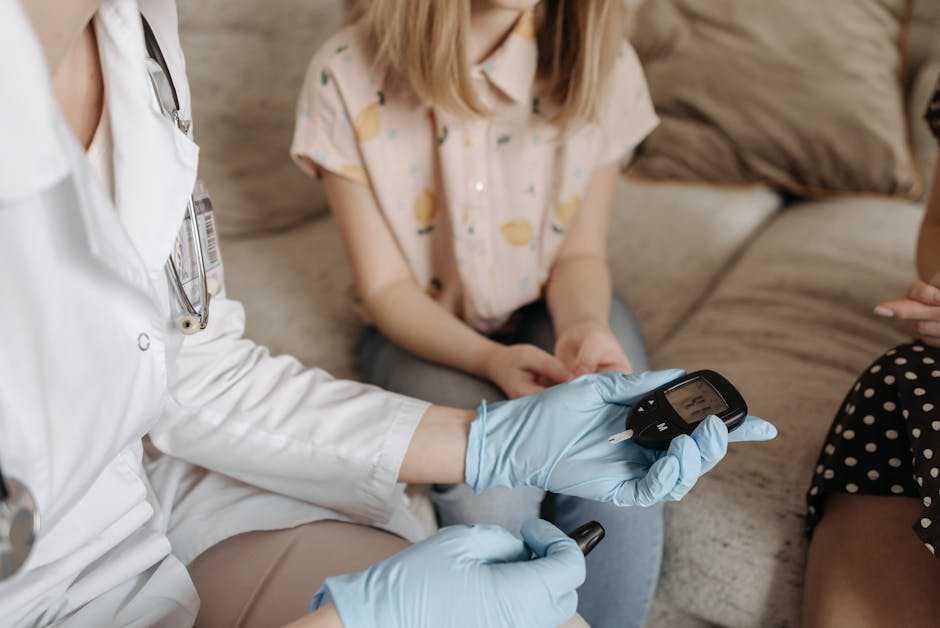
Post-meal walking is low-risk for most healthy adults. It is not risk-free for everyone, and the main concern is hypoglycemia.
Insulin and glucose-lowering medications
If you take insulin or a sulfonylurea (such as glipizide or glyburide), a post-meal walk lowers glucose on top of your medication. That combination can push you below your target range, particularly after an evening walk or when the meal was smaller than expected.
Practical steps: check glucose before and after early walks until you know your pattern, carry a fast-acting carbohydrate source, and ask your prescriber whether mealtime or basal doses need adjusting. Do not change doses on your own.
If you have type 1 diabetes, the effect depends heavily on how much insulin is still on board and the intensity of the walk. Some people see glucose fall; some see it rise with harder efforts. This is a conversation to have with your diabetes care team, not something to guess at.
Mobility limits, foot problems, and heart conditions
- Diabetic peripheral neuropathy or a history of foot ulcers: inspect feet before and after, wear well-fitted shoes, and favor seated or low-impact options.
- Balance problems or fall risk: walk indoors or on level, familiar ground, or use a chair-based routine.
- Heart failure, unstable angina, recent cardiac event, or uncontrolled arrhythmia: get clearance before adding structured activity, even brief and light.
- Gastroparesis: exercise affects gastric emptying, which can change how a meal and your insulin line up. Discuss timing with your clinician.
- Pregnancy with gestational diabetes: walking is generally encouraged, but confirm target glucose ranges and medication interactions with your obstetric provider.
Stop and seek medical attention for chest pain, severe shortness of breath, dizziness, or signs of hypoglycemia (shakiness, sweating, confusion, rapid heartbeat) during or after a walk.
Frequently Asked Questions
Does the 10-minute post-meal walk work for people without diabetes?
Yes, in the sense that it measurably lowers post-meal glucose excursions in healthy adults too. The clinical benefit is largest for people with impaired glucose tolerance or type 2 diabetes, and the general fitness benefit applies to everyone.
Is walking right after eating — zero minutes of waiting — better?
Some studies have found benefit from activity started immediately, and there's no harm in it for most people. But the glucose peak usually arrives 30 to 60 minutes after the meal starts, so beginning within the 15-to-30-minute window tends to align better with the rise. If you have reflux or feel uncomfortable walking on a full stomach, waiting a bit is sensible.
How many days do I need to do this before it counts?
Each walk has an acute effect that lasts hours, so there's benefit from day one. Longer-term glycemic control (measured by A1c) comes from consistency over weeks and months, combined with diet, sleep, and medication where prescribed.
Can I count this toward my 150 minutes of weekly activity?
Yes. Three 12-minute post-meal walks per day adds up to roughly 250 minutes per week of moderate-intensity activity, which exceeds the standard adult guideline. That's a meaningful bonus on top of the glucose effect.
What if my CGM shows no change?
Check the pace and timing first — those are the two most common reasons the effect is invisible. If it still doesn't move, it may be that your meal composition, medication, or baseline glucose dynamics dominate. Talk to your clinician rather than increasing duration indefinitely.
The Bottom Line
A 10-minute brisk walk started 15 to 30 minutes after a meal is a low-cost, low-risk way to reduce post-meal glucose spikes, and the timing advantage holds up in randomized comparisons against walking the same amount at other times. It isn't a substitute for medication, diet quality, or medical care — but for many people it's the easiest measurable win available.
Start tonight with dinner. Set a timer for 20 minutes after your first bite, walk briskly for 10, and note how you feel. If you use glucose-lowering medication, make a note of your before-and-after readings and bring them to your next appointment.