
Most fitness programs focus on the short-term: losing ten pounds for a wedding, building muscle for the summer, or hitting a personal best in a 5K. While these goals are valid, they often neglect the most important competition you will ever face: the 'Marginal Decade.' This term, popularized by longevity experts, refers to the final ten years of your life. Will you be mobile, independent, and active, or will you be confined to a chair, struggling with basic tasks? Longevity training is the intentional practice of preparing your body today for the physical demands of your 80-year-old self.
By shifting your focus to functional longevity, you move away from aesthetic-driven workouts and toward a science-backed framework designed to preserve your quality of life. This blueprint addresses the four pillars of human performance—strength, stability, aerobic base, and aerobic peak. In the following guide, we provide a comprehensive checklist to help you build a body that lasts. Whether you are in your 20s or your 60s, the best time to start your longevity training journey is right now.
Before You Start: Assessing Your Starting Point

Before diving into a rigorous longevity training protocol, it is essential to understand your current physical baseline. Longevity is not a sprint; it is a decades-long marathon. Pushing too hard too soon can lead to injuries that set you back years. Consider these foundational steps:
- Consult with a healthcare professional: Ensure your heart health and joint integrity are ready for increased loads.
- Document your baseline metrics: Record your current weight, resting heart rate, and any existing mobility limitations.
- Adopt a long-term mindset: Success in longevity training is measured in decades, not weeks. Consistency is more important than intensity.
Category: The Strength Pillar
Strength is arguably the most critical factor in maintaining independence as you age. Sarcopenia, or the age-related loss of muscle mass and strength, begins as early as your 30s and accelerates significantly after 60. By focusing on resistance training, you create a 'muscle reserve' that protects your bones and metabolic health.
☐ Prioritize Heavy Compound Movements
To train for your 80-year-old self, you must master movements that mimic real-life activities. Compound exercises like squats, deadlifts, and presses engage multiple joint groups and stimulate the central nervous system. These movements increase bone mineral density, which is crucial for preventing fractures later in life. Aim for 2-3 sessions per week where you lift weights that feel challenging (around 70-80% of your maximum effort).
☐ Build Elite Grip Strength
Research consistently shows that grip strength is one of the strongest predictors of all-cause mortality. A weak grip often correlates with overall frailty and cognitive decline. To improve this metric, incorporate 'farmer's carries' (walking while holding heavy weights) and dead hangs into your routine. Your 80-year-old self needs the hand strength to open jars, carry groceries, and catch themselves if they slip.
☐ Focus on Eccentric Control
Eccentric strength is the ability to control a weight as it lowers. This is the type of strength required to walk down a flight of stairs safely. Many injuries in older age occur during the 'descending' phase of a movement. When lifting, focus on a slow, controlled 3-second lowering phase. This builds structural integrity in the tendons and ligaments, making your joints more resilient to wear and tear.
Category: The Stability and Mobility Pillar
Stability is the ability to move through a physical environment without falling or losing balance. For an 80-year-old, a simple fall can be life-altering. Longevity training must include dedicated work to improve proprioception (your body's awareness of where it is in space) and foot health.
☐ Master Single-Leg Balance

Balance is a 'use it or lose it' skill. As we age, our vestibular system and fast-twitch muscle fibers decline, making it harder to stay upright. Practice standing on one leg while brushing your teeth, or incorporate single-leg Romanian deadlifts into your workouts. The goal is to be able to stand on one leg for at least 30 seconds with your eyes closed—a true test of neurological and muscular stability.
☐ Strengthen the Foot-to-Ground Connection
Your feet are your only contact point with the earth. Weak feet lead to unstable ankles, which lead to knee and hip pain. Longevity training should involve exercises that strengthen the intrinsic muscles of the foot. Try picking up marbles with your toes or performing calf raises barefoot. Improving your foot strength provides a more stable foundation for every other movement you perform.
☐ Incorporate Spinal Decompression and Rotation
A stiff spine is a hallmark of aging. To maintain mobility into your 80s, you must keep your vertebrae moving. Practice daily mobility drills that focus on thoracic rotation and lumbar stability. Yoga or Pilates can be excellent supplements to a longevity routine, as they emphasize the relationship between breath, core control, and spinal alignment.
Category: The Aerobic Base (Zone 2)
Your aerobic base is the foundation of your cardiovascular health. It is often measured through 'Zone 2' training, which is low-intensity steady-state exercise where you can still hold a conversation but feel your heart rate is elevated. This type of training improves mitochondrial efficiency, allowing your body to burn fat more effectively and recover faster.
☐ Commit to 150-300 Minutes of Zone 2 Weekly
Zone 2 training is the 'slow and steady' work that builds a massive aerobic engine. This can include brisk walking, cycling, or swimming. The key is to keep your heart rate in a range where you are working but not gasping for air. This pillar of longevity training reduces the risk of metabolic diseases like Type 2 diabetes and cardiovascular disease, which are leading causes of death in older populations.
☐ Monitor Your Resting Heart Rate
A lowering resting heart rate (RHR) is a sign of an increasingly efficient heart. By tracking your RHR over time, you can see the direct impact of your aerobic base training. An 80-year-old with a strong, efficient heart has a much higher 'functional floor,' meaning they can perform daily tasks with significantly less strain on their system.
Category: The Aerobic Peak (VO2 Max)
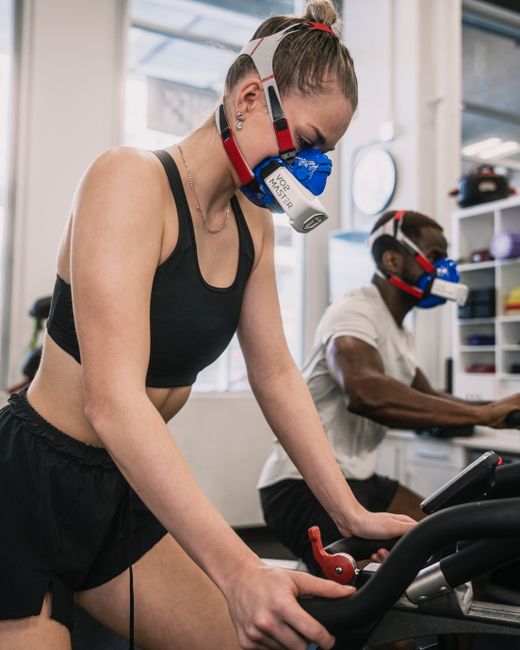
While Zone 2 is your base, VO2 Max is your ceiling. VO2 Max is the maximum amount of oxygen your body can utilize during intense exercise. It is perhaps the single most important metric for predicting how long you will live. A high VO2 Max in middle age acts as a 'buffer' against the natural decline that occurs with aging.
☐ Include One High-Intensity Interval Session Per Week
To move the needle on your VO2 Max, you must occasionally push your heart to its limits. This is often done through 4x4 intervals: four minutes of high-intensity effort followed by three minutes of recovery, repeated four times. This type of longevity training is demanding but provides the highest return on investment for cardiovascular longevity. It forces the heart to pump more blood per beat, increasing its stroke volume.
☐ Test Your Aerobic Power Annually
You cannot manage what you do not measure. Use a Cooper Test (12-minute run) or a sub-maximal cycling test to estimate your VO2 Max at least once a year. Seeing these numbers stay steady or improve as you age is the ultimate proof that your longevity training protocol is working.
The Longevity Weekly Routine Structure
How do you fit all of these pillars into a single week? Balancing heavy lifting with high-volume cardio requires a strategic approach to prevent burnout. Here is a sample template for a well-rounded longevity training week:
- Monday: Heavy Resistance Training (Strength & Grip) + 10 mins Stability
- Tuesday: 45-60 minutes Zone 2 Cardio
- Wednesday: Heavy Resistance Training (Strength & Lower Body Power)
- Thursday: 45-60 minutes Zone 2 Cardio + 15 mins Mobility
- Friday: VO2 Max Interval Session (4x4 Protocol)
- Saturday: Long Zone 2 Session (Hiking, Cycling, or Long Walk)
- Sunday: Active Recovery (Yoga, light stretching, or rest)
This structure ensures you are hitting all four pillars while allowing enough time for the recovery that becomes increasingly important as we age. Remember, the goal of longevity training is not to be the best at one thing, but to be 'good enough' at everything to maintain a high level of function for life.
Summary: Your Path to a Functional Future
Training for your 80-year-old self is the ultimate act of self-care. It requires a departure from the 'no pain, no gain' mentality and an embrace of 'smart, sustainable gains.' By focusing on strength, stability, and a robust cardiovascular system, you are essentially buying an insurance policy for your future independence.
Downloadable Summary: Keep this checklist in your gym bag or on your fridge as a reminder of your long-term goals. Focus on the metrics that matter—grip strength, balance, and VO2 Max—and you will find yourself thriving long after others have slowed down. Your future self will thank you for the work you do today.