In today's fast-paced professional world, the traditional hour-long gym session is becoming increasingly difficult to maintain. Many of us spend the majority of our days tethered to a desk, a lifestyle choice that has given rise to what researchers call "sitting disease." However, you don't need a heavy barbell or a treadmill to maintain your health. You can stay fit without a gym by embracing the concept of "movement snacks"—short, frequent bursts of activity that occur throughout the day.
This guide will show you how to transform your daily routine into a series of health-boosting opportunities. By the end of this post, you will have a personalized movement menu and a strategy to integrate fitness into even the most demanding office schedule without ever needing a post-workout shower.
The Science of Movement Snacks vs. Sitting Disease

For years, we believed that a single hour of vigorous exercise could offset a day of inactivity. Recent physiological studies suggest otherwise. When we sit for prolonged periods, our metabolism slows down, blood sugar regulation becomes less efficient, and our postural muscles begin to atrophy. This phenomenon, often called "Active Couch Potato Syndrome," occurs when someone meets the minimum exercise guidelines but remains sedentary for the other 23 hours of the day.
Movement snacks, or micro-workouts, function as a "metabolic reset." Research indicates that performing three minutes of activity every 30 minutes can significantly improve insulin sensitivity and vascular function. These short bursts keep your enzymes active, specifically lipoprotein lipase, which helps your body process fats and sugars. By choosing to stay fit without a gym through these frequent intervals, you are providing your body with the constant signals it needs to stay in an anabolic, or building, state.
Prerequisites for Your Micro-Workout Routine
Before you begin your journey toward a more active lifestyle, you only need a few basic elements. The beauty of this approach is its simplicity.
- A Timer or App: Something to remind you to move every 30 to 60 minutes (a smartwatch, phone, or browser extension).
- Comfortable Footwear: While not strictly necessary, flat shoes or sneakers make movement easier.
- A Small Space: Approximately 5x5 feet of floor space near your desk or in a breakroom.
- The "No-Sweat" Mindset: The goal is consistency and blood flow, not reaching maximum heart rate or total exhaustion.
Step 1: Audit Your Daily Schedule for "Dead Time"
The first step to learning how to stay fit without a gym is identifying the natural gaps in your day. Most people assume they are "too busy," but we all have transition periods that are currently underutilized. Look for moments where you are waiting or performing a low-cognition task.
Common "dead time" opportunities include:
- Waiting for the coffee to brew or the microwave to finish.
- Being on a "listen-only" conference call.
- The first five minutes after you wake up.
- Immediately after returning from a lunch break.
- The time spent waiting for a large file to download or upload.
By mapping these moments, you create "triggers." For example, "When I finish a client call, I will perform one movement snack." This removes the decision fatigue associated with exercise.
Step 2: Design Your Personalized Movement Menu
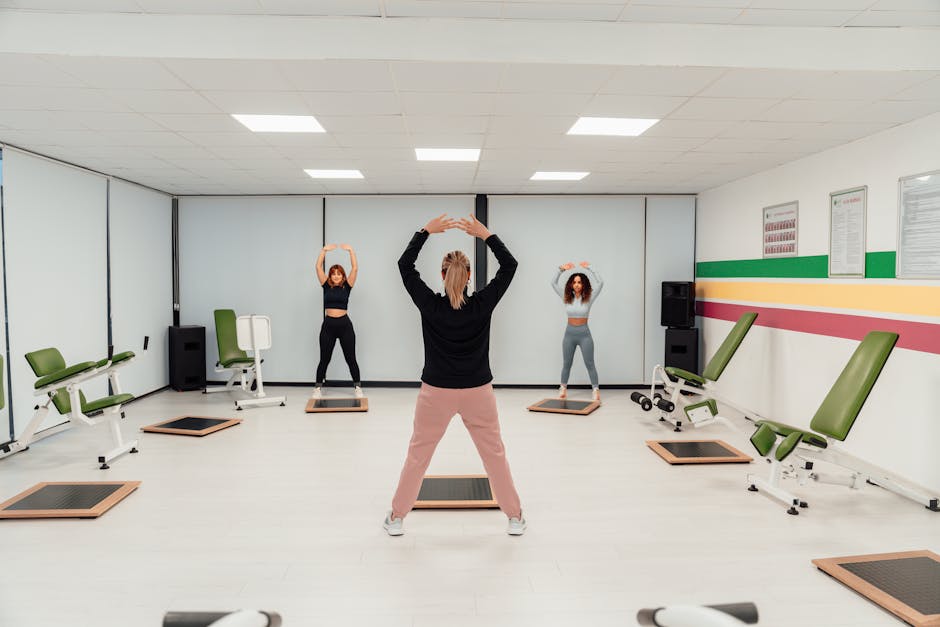
To keep things interesting and balanced, you need a variety of movements. A "Movement Menu" categorizes exercises into three main buckets: Strength, Mobility, and Metabolic. To stay fit without a gym, aim to pick one item from this menu every hour.
Strength Drills (Focus on Muscle Activation)
These movements help maintain muscle mass and bone density without requiring equipment.
- Desk Push-ups: Place your hands on the edge of a sturdy desk and perform 15 controlled repetitions.
- Glute Squeezes and Leg Extensions: While sitting, straighten one leg and squeeze your quad and glute, hold for 5 seconds, and repeat.
- Wall Sits: Lean against a wall and lower yourself until your thighs are parallel to the floor. Hold for 45 seconds.
Mobility Drills (Focus on Joint Health)
These exercises reverse the "hunched" posture common in office workers.
- Doorway Chest Stretch: Place your forearms on a door frame and lean forward to open the chest and shoulders.
- The World's Greatest Stretch: A deep lunge with a thoracic rotation to open the hips and mid-back.
- Seated Spinal Twists: Sit tall and rotate your torso to look over each shoulder, using the chair's armrest for leverage.
Metabolic Drills (Focus on Blood Flow)
These are designed to get the heart rate up slightly without causing a sweat.
- Marching in Place: High knees for 60 seconds.
- Calf Raises: Stand behind your chair and rise onto your toes 30 times.
- Fast-Paced Walking: A 2-minute brisk walk to the water fountain and back.
Step 3: Implementation of the "No-Sweat" Intensity Rule
One of the biggest barriers to staying fit without a gym while at work is the fear of hygiene issues. To avoid needing a shower, you must manage your intensity. Use the "Talk Test" during your movement snacks.
You should be able to carry on a conversation comfortably throughout the movement. If you find yourself breathing heavily or feeling a bead of sweat, reduce the tempo. The goal is frequent movement, not high-intensity interval training (HIIT). By keeping the heart rate in a moderate zone, you stimulate the lymphatic system and clear out metabolic waste without ruining your professional attire.
Step 4: Create Visual and Digital Cues
Relying on willpower is a losing strategy. To successfully stay fit without a gym, you must modify your environment to encourage movement. Digital cues are your first line of defense. Set a recurring "meeting" on your calendar called "Movement Snack" every 90 minutes.
Visual cues are equally powerful. Place a pair of light dumbbells or a resistance band on your desk where you can see them. Alternatively, put a post-it note on your monitor that simply says "Stand Up." These environmental nudges bypass the part of your brain that wants to remain comfortable and sedentary, making the healthy choice the easiest choice.
Step 5: Track Your "Daily Movement Points"

Instead of tracking calories or miles, track "points." Assign one point to every 5-minute movement snack you complete. Set a goal for 6 to 8 points per day. This gamification makes the process rewarding and provides a sense of accomplishment even on days when you can't make it to a formal workout.
Use a simple habit tracker or a dedicated notebook. When you see a string of successful days, you build "habit loops." Over time, these movement snacks become as automatic as brushing your teeth. This is the ultimate secret to how to stay fit without a gym: making movement a non-negotiable part of your identity rather than a chore on your to-do list.
Troubleshooting and FAQs
What if I work in an open-office plan?
If you feel self-conscious, focus on "invisible" movements. These include seated leg extensions, calf raises under the desk, or taking the long route to the restroom. You can also advocate for "walking meetings" which are becoming increasingly popular in corporate culture.
How long before I see results?
Physiologically, you will feel the effects almost immediately. You'll notice improved focus, higher energy levels in the afternoon, and less lower back pain. Physical changes in body composition usually take 4-6 weeks of consistent daily movement snacks.
Can this really replace the gym?
While movement snacks are excellent for general health, longevity, and weight maintenance, they are a supplement to, or a foundation for, fitness. If your goal is to win a bodybuilding competition, you'll eventually need more resistance. However, for the average professional looking to stay fit without a gym and avoid the dangers of a sedentary life, this method is incredibly effective and much more sustainable.
Quick Summary
To stay fit without a gym using movement snacks, follow these steps:
- Audit: Find 5-minute gaps in your daily schedule.
- Menu: Create a list of strength, mobility, and cardio drills.
- Intensity: Keep movements at a "no-sweat" level.
- Cues: Use timers and visual reminders to trigger activity.
- Track: Aim for 6-8 micro-sessions per day to combat sitting disease.
By shifting your perspective from "exercise as an event" to "movement as a lifestyle," you can maintain peak physical health regardless of how busy your work schedule becomes. Start today by standing up and performing ten air squats—your body will thank you.