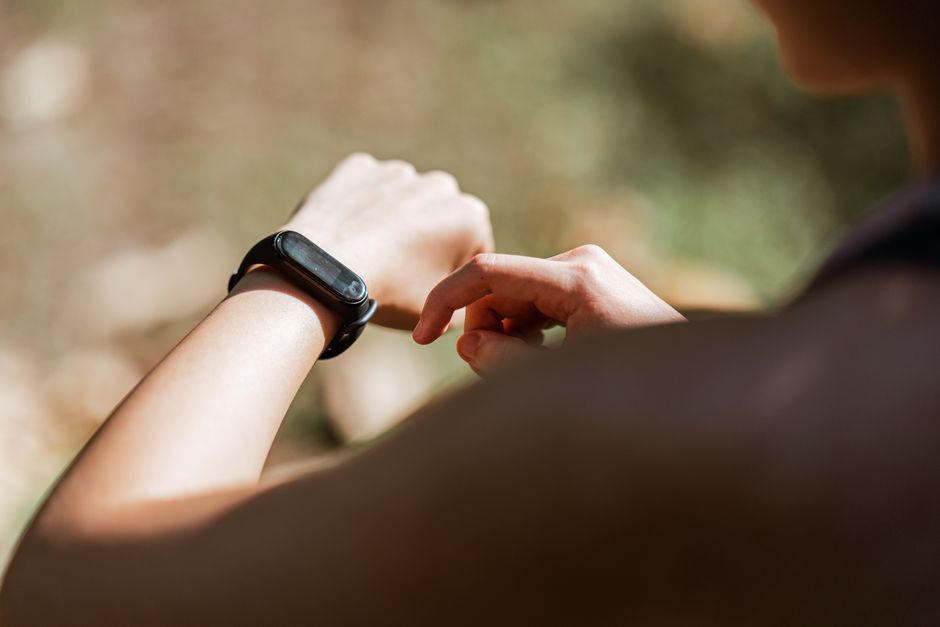
If your fitness tracker tells you that you burned 600 calories during a lunch-hour run, you're likely to reward yourself with an extra snack—or skip that second helping of vegetables at dinner. But according to exercise physiologist and metabolic researcher Dr. Sarah Chen, those glowing numbers are almost certainly wrong. In many cases, they're off by hundreds of calories, which can sabotage weight-loss efforts, mislead progress, and leave you frustrated for reasons that have nothing to do with willpower.
Dr. Chen holds a PhD in exercise physiology from the University of Colorado and has spent the past decade studying energy expenditure measurement in both laboratory and real-world settings. Her research has been published in Medicine & Science in Sports & Exercise and The American Journal of Clinical Nutrition. In this interview, she explains exactly why wearable calorie estimates fail, how the evidence stacks up, and what you can do to get a trustworthy number without a metabolic cart.
Why Are Fitness Tracker Calorie Estimates So Often Wrong?
Interviewer: Dr. Chen, let's start with the big question. Millions of people rely on their Apple Watch, Fitbit, or Garmin to tell them how many calories they've burned. Why are those numbers so unreliable?
Dr. Chen: The short answer is that wearables estimate energy expenditure indirectly. They measure heart rate and movement through accelerometers, then plug that data into general algorithms. They're not measuring calories directly—they're inferring them. The only gold standard for measuring energy expenditure is direct or indirect calorimetry, which requires a metabolic cart in a lab. That's why you see error rates that can range from 27% to 93% depending on the activity and device.
A well‑known 2017 study from Stanford tested several popular wearables and found that even the most accurate device underestimated calories by about 27% on average, while the least accurate overshot by more than 90%. That's a huge spread. For someone trying to manage their weight, relying on that number is like navigating with a compass that points in random directions.
“Relying on that number is like navigating with a compass that points in random directions.”
The Science Behind the Inaccuracy
Wearables rely on heart rate–based equations that assume a linear relationship between heart rate and oxygen consumption. That works fine at steady‑state aerobic exercise, but it breaks down during interval training, weight lifting, or any activity where heart rate lags behind effort. Accelerometers are even worse: they can't capture the energy cost of carrying a load, walking uphill, or using your upper body.
Most devices also apply a single algorithm for all users, ignoring individual differences in fitness level, muscle mass, and metabolic efficiency. A trained runner burns fewer calories at a given heart rate than a sedentary person, yet the tracker treats them the same.
How Inaccurate Estimates Derail Weight Loss
Interviewer: What happens when people try to “eat back” the calories their tracker says they burned?
Dr. Chen: It usually stalls weight loss. I see this all the time with clients. Someone sets a daily calorie target of 1,800, works out, sees 500 calories burned on their watch, and eats an extra 300–400 calories to “refuel.” But because the tracker overestimated by, say, 40%, they are actually only burning 300 calories, so they end up in a surplus. Over a week, that can be enough to negate the deficit they think they've created.
In a 2021 validation study I co‑authored, we found that during walking at a moderate pace, a leading wrist‑worn device overestimated expenditure by an average of 63%. That means a person who thinks they burned 300 calories in a walk may actually have burned only 185. Eating back the full 300 would completely wipe out the calorie deficit they earned.
The “Compensation Trap”
There's also a behavioral effect: people become less active the rest of the day because they feel they've earned a break. Combine that with overestimated burn, and you have a double blow to progress. The tracker gives you a false sense of permission.
The Better Approach: TDEE Calibration Without a Lab
Interviewer: So what should people use instead? How can they accurately gauge their energy needs without expensive equipment or a metabolic cart?
Dr. Chen: The most practical and evidence‑based method is the TDEE calibration technique. TDEE stands for total daily energy expenditure. You can estimate your own by tracking two things: your body weight and your calorie intake, and then looking at the trend. Here's the step‑by‑step process I recommend:
- Step 1: Track your food intake precisely for 10–14 days. Use a food scale and an app like MyFitnessPal or Cronometer. Aim for at least 90% accuracy. This is your baseline intake.
- Step 2: Weigh yourself every morning after using the bathroom and before eating or drinking. Use the same scale, on a hard surface. Record the number.
- Step 3: After 10–14 days, calculate your average daily calorie intake and your average daily weight. Then compare the end weight to the start weight.
- Step 4: Determine your weight trend. If your weight stayed exactly the same, your average intake equals your TDEE. If you lost weight, your intake was below TDEE. If you gained, it was above.
- Step 5: Adjust your intake by 100–200 calories based on the trend. For example, if you lost one pound over two weeks (a deficit of about 250 calories per day), you can add 100–200 calories to find a sustainable maintenance level, or keep the same deficit to continue losing.
This method gives you a personalized TDEE that accounts for everything—your metabolism, activity, and even the thermic effect of food. It's far more reliable than any wearable.
Why 10–14 Days?
Water weight fluctuations can obscure a single day's weight. A 10‑ to 14‑day window smooths out those fluctuations and reveals the true energy balance. In my practice, I've seen people discover that their actual TDEE is 200–400 calories different from what any formula predicted.
Should You Stop Using Your Fitness Tracker?
Interviewer: Are you saying people should throw away their wearables? Many have invested a lot of money in them.
Dr. Chen: Absolutely not. Fitness trackers are excellent tools for many things—just not for counting calories as a precise ledger. Here's how I recommend using them:
- Step counts and daily movement — Trackers excel at this. Aim for 7,000–10,000 steps as a general health goal.
- Heart rate trends over time — Changes in resting heart rate can indicate overtraining or improvements in cardiovascular fitness.
- Consistency and motivation — Seeing your weekly activity streak can be a powerful behavioral nudge.
What you should not do is treat the calorie number as a bank account. Don't add it to your food diary. Don't adjust your dinner based on a workout estimate. Instead, use the TDEE calibration method to set your daily target, and then let your weight trend tell you whether you're on track.
A Practical Example
Let's say you wear a Garmin and it says you burned 2,400 calories today. Your TDEE calibration from last week showed your actual TDEE is 2,150. The tracker is off by 250 calories. If you ate back the tracker's estimate, you'd gain weight. If you stick with your calibrated target of 1,850 (to create a 300‑calorie deficit), you'll see results.
“Use your tracker to track your steps, not your calories.”
Key Takeaways from This Interview
- Wearable calorie estimates are often inaccurate by 27–93%, according to validation studies.
- Eating back “burned” calories from a tracker frequently stalls weight loss because of overestimation.
- The TDEE calibration method—tracking intake and weight for 10–14 days—provides a personalized, reliable estimate of your energy needs.
- Adjust intake in small increments (100–200 calories) based on your actual weight trend, not on what a watch says.
- Keep using your fitness tracker for steps, heart rate trends, and consistency, but ignore the calorie number for dietary decisions.
About Dr. Sarah Chen
Dr. Sarah Chen is an exercise physiologist and researcher based in Boulder, Colorado. She holds a PhD from the University of Colorado and has published 20 peer‑reviewed studies on energy expenditure measurement and wearable technology. She now runs the Metabolic Health Lab, where she works with individual clients to optimize weight management through evidence‑based practices. Find her online at sarahchenphd.com or on Instagram @drsarahchen.
Disclaimer: This article is for informational purposes only and does not constitute medical advice. Consult with a healthcare provider before making significant changes to your diet or exercise routine.