If you've been slogging away on the treadmill for weeks and the scale hasn't budged, you're not alone. The common advice to "just do more cardio" for weight loss is a myth that often backfires. While cardio burns calories during the workout, it does little to address your resting metabolism. Strength training, on the other hand, rewires your body to burn fat even when you're sitting still. This listicle breaks down the science of why cardio alone fails and gives you a proven, combined routine that actually works.
1. Cardio Causes Metabolic Adaptation – Why You Stop Losing Weight

Your body is remarkably efficient. When you do the same steady-state cardio day after day, it adapts by burning fewer calories for the same amount of work. This phenomenon, called metabolic adaptation, is one of the main reasons weight loss plateaus happen so quickly with cardio-only routines.
Why it matters: A 2012 study in the Journal of the American Medical Association found that participants who ran for 30 minutes daily lost significantly less weight over 12 weeks than predicted by calorie equations. Their bodies compensated by reducing non-exercise activity (like fidgeting) and lowering resting energy expenditure.
Example: Imagine you burn 300 calories on your morning jog. After two weeks, your efficiency improves and you only burn 250 calories for the same run. You eat the same, but your net deficit shrinks. The result? The scale stops moving.
Practical note: Avoid this trap by varying your cardio intensity and including strength work. Do not rely on the same machine at the same pace every workout.
2. Strength Training Boosts Your Resting Metabolism by Up to 7%
While cardio burns calories during the activity, strength training builds muscle tissue that consumes calories around the clock. Research published in the Journal of Applied Physiology showed that just 10 weeks of resistance training increased participants' resting metabolic rate by 7%, on average. That translates to an extra 100–140 calories burned per day without moving a muscle.
Why it matters: Resting metabolic rate accounts for 60–75% of total daily energy expenditure. A small permanent increase here has a massive cumulative effect over weeks and months.
Example: A 150-pound woman who adds three strength sessions per week can expect to burn an additional 30,000–40,000 calories over a year from the RMR boost alone – equivalent to about 10 pounds of fat loss, even if her diet stays the same.
Practical note: Focus on compound lifts like squats, deadlifts, and rows. These engage multiple muscle groups and produce a larger metabolic response than isolation exercises.
3. The Afterburn Effect Is Much Stronger After Lifting Weights
Excess post-exercise oxygen consumption (EPOC), commonly called the afterburn effect, is the extra energy your body burns to return to its resting state. Strength training creates micro-tears in muscle fibers, which require significant oxygen and calories to repair. A study in the European Journal of Applied Physiology compared EPOC after cardio and resistance training: lifting induced a 15–20% higher calorie burn for up to 38 hours after the session, versus just 2–4 hours after steady-state cardio.
Why it matters: This means that after a heavy lifting workout, your body continues to burn fat while you sleep, work, or watch TV. You literally earn a longer calorie deficit without extra effort.
Example: A 2015 study found that participants who performed a total-body strength routine burned an extra 150 calories over the next 24 hours compared to those who did moderate-intensity cycling. Over a week with three lifting sessions, that's 450 extra calories – almost a full extra workout's worth.
Practical note: Maximize EPOC by using heavy weights (70–80% of your one-rep max) and moderate rest periods (60–90 seconds). Include compound movements that demand high systemic energy.
4. Muscle Mass Increases Your Daily Calorie Burn 24/7

Muscle tissue is metabolically active – it requires more calories to maintain than fat tissue. Each pound of muscle burns roughly 6–10 calories per day at rest, while a pound of fat burns only 2–3. Adding 5 pounds of lean muscle can increase your daily baseline burn by 30–50 calories. That may not sound huge, but it adds up to 10,000–18,000 extra calories per year.
Why it matters: Cardio alone does not build significant muscle; it can even encourage muscle loss if you're in a calorie deficit without strength training. Less muscle means a lower metabolism, making it harder to keep weight off long-term.
Example: Two people weigh the same 180 pounds. One has 30% body fat (high muscle), the other 25% body fat (very high muscle). The second person burns about 75 more calories per day – enough to offset a small snack or a latte, making weight maintenance much easier.
Practical note: Aim for progressive overload – gradually increase the weight or reps each week. Even tiny gains in muscle mass compound into a faster metabolism over several months.
5. A Combined Routine Delivers Superior Results – Sample Weekly Schedule
The most effective fat-loss plan uses both cardio and strength training strategically. Cardio is excellent for cardiovascular health and acute calorie burn, while strength training preserves and builds the machine that burns calories all day. Here is a proven weekly schedule that optimizes both:
- Monday: Full-body strength training – 45 minutes, heavy compound lifts (squats, bench press, rows)
- Tuesday: Low-intensity steady-state cardio – 30 minutes brisk walk or incline treadmill (zone 2)
- Wednesday: Full-body strength training – 45 minutes, moderate weight, focus on form
- Thursday: High-intensity interval training (HIIT) – 20 minutes, 30-second sprints with 60-second rest
- Friday: Full-body strength training – 45 minutes, lighter weight but higher reps for endurance
- Saturday: Active recovery – 30 minutes yoga or swimming
- Sunday: Rest
Why it matters: This schedule maximizes muscle growth and EPOC while providing cardiovascular benefits. The two cardio sessions (one steady-state, one HIIT) improve heart health without overtaxing recovery.
Example: A 2020 study in Obesity followed two groups: one did cardio only, the other did the same cardio plus three strength sessions. The combined group lost 2.5 times more body fat and retained 3 pounds more lean mass over 12 weeks.
Practical note: If you're short on time, prioritize strength training and use HIIT for cardio since it creates a stronger metabolic response than steady-state in less time.
Bonus: The Best Way to Start Strength Training for Weight Loss
If you're new to lifting, begin with a full-body routine twice per week. Use machines or dumbbells to learn movement patterns safely. Focus on compound exercises: squats, hip hinges (like deadlifts), pushes (bench press), and pulls (rows). Start with 3 sets of 8–12 reps at a weight that feels challenging by the last 2 reps. Rest 60–90 seconds between sets. Increase the weight by 5–10% once you can complete all reps with good form. This progressive approach builds muscle steadily while keeping your risk of injury low.
What to Do Next
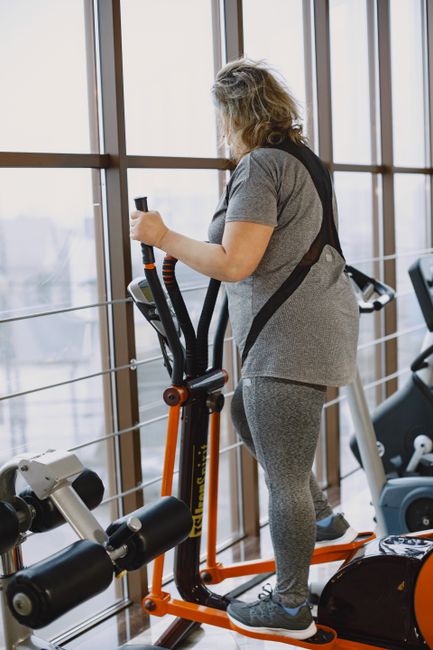
Stop relying on endless cardio. Instead, commit to at least two strength training sessions per week for the next 6 weeks. Use the sample schedule above as a template. Track your progress – not just on the scale, but with measurements, photos, and how your clothes fit. Strength training may not make you feel like you're "working out" as hard as a sprint session, but the metabolic payoff is far greater. If you're unsure about proper form, book a session with a certified personal trainer or watch reputable instructional videos from the National Strength and Conditioning Association. Your future self – leaner, stronger, and with a faster metabolism – will thank you.
Conclusion: Cardio Has a Place, But Strength Training Makes Weight Loss Stick
Cardio is a valuable tool for heart health and acute calorie burn, but it is not the optimal solution for lasting weight loss. Metabolic adaptation, lack of muscle building, and minimal afterburn effect limit its effectiveness. Strength training, on the other hand, raises your resting metabolism, creates a powerful EPOC effect, and builds metabolically active tissue that burns fat 24/7. The smartest approach is a balanced routine that uses both modalities strategically. Ditch the myth that more miles equals more weight loss. Lift heavy, recover well, and watch your body transform.