If you have been hitting the gym consistently but find your strength stagnating or your motivation plummeting, you might not have a muscle problem—you likely have a nervous system problem. This guide moves beyond generic advice to help you perform an "Invisible Recovery" audit using objective, low-tech biometrics to identify Central Nervous System (CNS) fatigue before it turns into a full-blown plateau.
1. Distinguishing Local Soreness from Systemic Fatigue
To understand why your progress has stalled, you must first distinguish between local muscular fatigue and systemic nervous system fatigue. Local fatigue is what most lifters recognize as Delayed Onset Muscle Soreness (DOMS). It is the physical tightness and tenderness in a specific muscle group, usually resulting from micro-tears in the muscle fibers. While DOMS can be uncomfortable, it is a localized issue that rarely prevents the rest of your body from performing at a high level.
Systemic fatigue, or Central Nervous System (CNS) fatigue, is far more insidious because it is invisible. Your CNS is the command center that sends electrical signals to your muscles to contract. When this system is overtaxed, the "signal" becomes weak or garbled. You might not feel sore at all, but your strength disappears, your coordination feels "off," and even moderate weights feel crushing. Unlike muscles, which can recover in 48 to 72 hours, a severely overtaxed nervous system can take several weeks to return to baseline.
Identifying the difference requires looking at your performance holistically. If your chest is sore but you can still sprint at full speed, you have local fatigue. If your chest feels fine but you find yourself tripping over your feet or struggling to focus on simple tasks, your CNS is likely the bottleneck. Understanding this distinction is the first step in moving from "training hard" to "training smart."
2. The Morning Grip Test: A Proxy for Neural Drive
One of the most reliable, low-tech ways to measure your nervous system's readiness is the Morning Grip Test. There is a direct correlation between your handgrip strength and the state of your central nervous system. When your CNS is fresh, it can recruit high-threshold motor units efficiently, resulting in a strong grip. When you are systemically fatigued, your neural drive drops, and your grip strength is often the first thing to decline—frequently before you even feel tired.
To perform this audit, you need a simple hand dynamometer or a pull-up bar. Every morning after waking up, test your max grip strength. If using a dynamometer, record your score. If using a pull-up bar, time a max-effort dead hang. Establish a baseline over seven days of normal training. Once you have your average, you can use it as a daily diagnostic tool to decide how hard to push in the gym.
If your grip strength is within 5% of your baseline, you are "green-lighted" for a heavy session. If it drops by 10% or more, your CNS is struggling to recover. This isn't a sign to quit, but a signal that your nervous system cannot handle maximum intensity that day. Using this objective data removes the guesswork and prevents you from forcing a heavy workout on a fried nervous system, which only deepens the recovery hole.
3. CO2 Tolerance: Measuring Your Autonomic Stress Load
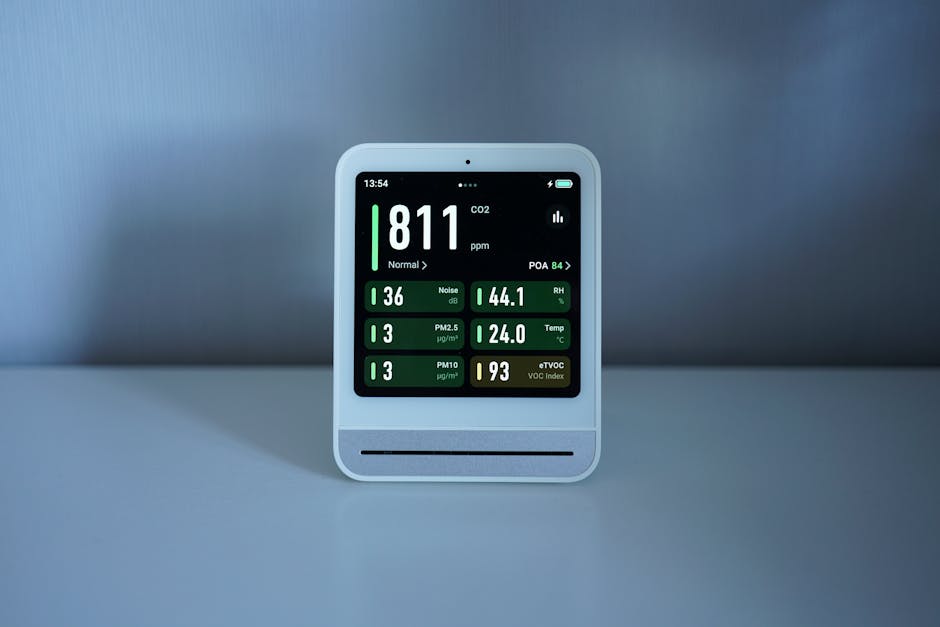
Your breathing patterns are a direct window into your autonomic nervous system. Specifically, your tolerance to carbon dioxide (CO2) can tell you whether you are stuck in a sympathetic (fight or flight) state or if you have successfully transitioned back into a parasympathetic (rest and digest) state. When the CNS is overtaxed, the body becomes hypersensitive to CO2 buildup, causing you to take shorter, shallower breaths and reducing your ability to hold your breath comfortably.
A simple way to test this is the CO2 Tolerance Test (often referred to as the BOLT score). Take three normal breaths, and on the third breath, exhale completely and hold. Time how long it takes until you feel the first definite urge to breathe. This is not a test of willpower; it is a test of your body's chemical sensitivity to CO2. A healthy, recovered athlete should typically be able to hold for 25–35 seconds without significant distress.
If you find your CO2 tolerance has dropped significantly—for example, if you usually hit 30 seconds but today you are struggling at 15—it is a clear sign that your nervous system is in a state of high alarm. Your body is prioritizing survival over adaptation. In this state, adding more high-intensity training is counterproductive. Instead, this biometric suggests you should prioritize low-intensity "tonic" movement or dedicated breathwork to shift your system back into recovery mode.
4. The "Heavy" Warm-up: Identifying Technical Failure Early
Sometimes the best diagnostic tool happens within the first ten minutes of your workout. We have all had days where the empty barbell or the first warm-up set feels inexplicably heavy. This is rarely a sign of muscle weakness; it is a sign of "neural inhibition." Your brain is essentially putting a "governor" on your output to protect the body from what it perceives as excessive stress.
Pay close attention to your technical proficiency during warm-ups. Are you hitting your usual positions with ease, or does the movement feel clunky? When the CNS is fatigued, fine motor control is the first thing to go. You might find yourself "missing" your groove on a squat or struggling to find your balance during a simple lunging movement. This is "technical failure," and it often precedes physical failure by several sets.
If your warm-up sets (40-50% of your max) feel like 70-80%, your CNS is sending you a message. Rather than ignoring this and "grinding through," you should use this as an objective data point. A fried nervous system cannot produce the explosive force required for PRs (personal records). When the warm-up feels heavy, it is a sign that your neurological recruitment is dampened, and continuing with a high-intensity plan will likely result in a poor session and increased injury risk.
5. Morning Pulse and HRV: The Engine’s Idle Speed

While high-tech wearables have made Heart Rate Variability (HRV) popular, you can get 80% of the benefit with a simple manual pulse check or a basic heart rate app. Your resting heart rate (RHR) acts like the idle speed of a car engine. If your engine is idling too high, it means the system is working overtime just to maintain basic functions, leaving very little "headroom" for the stress of a workout.
Check your pulse for 60 seconds immediately upon waking, before you get out of bed. If your RHR is 5 to 10 beats per minute (BPM) higher than your rolling average, your sympathetic nervous system is overactive. This elevation is often a precursor to overtraining syndrome or even an oncoming illness. It suggests that your body has not finished processing the stress from previous sessions (or life stress like poor sleep or work deadlines).
Pairing RHR with a subjective "readiness score" creates a powerful diagnostic. If your heart rate is elevated and you also feel a lack of "competitive drive"—that innate desire to push against a heavy load—it is a confirmation that the CNS is blocking your results. High-intensity training requires a high level of psychological arousal; if your heart is already racing and your mind is checked out, you are essentially trying to drive a car with the parking brake engaged.
The "Pivot, Don't Quit" Protocol
Once your audit reveals CNS fatigue, the solution isn't necessarily to stay on the couch. Instead, implement the "Pivot, Don't Quit" protocol to keep the habit of movement while allowing the nervous system to reset. This prevents the total loss of momentum while respecting your physiological limits.
- Reduce Intensity, Maintain Volume: If your grip is down 10%, drop your training weights by 15-20% but keep your sets and reps the same. This provides "tonic" blood flow to the muscles without the heavy neurological load of near-maximal lifting.
- Shift the Stimulus: If technical movements feel clunky, swap complex lifts (like snatches or back squats) for more stable variations (like goblet squats or machine presses). This reduces the "coordination demand" on your CNS.
- The 20-Minute Rule: Start your workout with the intention of doing only 20 minutes of low-intensity work. If you feel significantly better after 20 minutes, you can gradually increase the load. If you still feel "flat," pack it in and focus on sleep and nutrition.
Bonus: The "Sleep Latency" Indicator
A final, often overlooked sign of CNS fatigue is how quickly you fall asleep. While we usually think of fatigue as making us sleepy, a severely overtaxed nervous system can actually cause "tired but wired" syndrome. If you find yourself staring at the ceiling for 45 minutes despite being physically exhausted, your CNS is likely stuck in a high-arousal state. This inability to down-regulate is a major red flag that your training volume has exceeded your recovery capacity.
In summary, plateaus are rarely a sign that you need to work harder; they are usually a sign that your Central Nervous System is calling for a strategic retreat. By using the Morning Grip Test, CO2 tolerance, and RHR as your guide, you can stop guessing and start training in alignment with your body's actual capacity. This objective approach ensures that every session you perform is actually moving the needle forward rather than just digging a deeper hole.