
In the modern corporate world, the chair has become our most constant companion, yet it is also one of our greatest health silent threats. This guide provides effective 5-minute desk drills to combat sitting disease, helping you reclaim your metabolic health and vitality without ever stepping foot in a gym. By integrating these micro-movements into your workday, you can reverse the negative physiological impacts of a sedentary lifestyle.
1. Understanding the Physiological Risks of Sitting Disease

Before diving into the movements, it is essential to understand why these desk drills are necessary for your long-term survival. Modern researchers have coined the term "Sitting Disease" to describe the metabolic and cardiovascular consequences of prolonged sedentary behavior. When you sit for more than six hours a day, your body begins to shut down at a cellular level, regardless of whether you go to the gym later in the evening.
The primary concern involves an enzyme called lipoprotein lipase (LPL). This enzyme is responsible for breaking down fats in the bloodstream and converting them into energy. When you are sedentary, LPL activity drops significantly, leading to higher levels of triglycerides and a decrease in HDL (good) cholesterol. Over time, this increases the risk of heart disease, type 2 diabetes, and obesity. Furthermore, prolonged sitting slows your circulation, which can lead to blood pooling in the legs and an increased risk of deep vein thrombosis.
To combat these risks, you must interrupt sedentary periods with frequent movement. These micro-breaks act as a "metabolic reset," signaling to your body that it needs to keep its fat-burning and glucose-regulating systems online. By performing these drills every hour, you aren't just stretching; you are actively managing your internal chemistry and protecting your cardiovascular system from the cumulative damage of the office chair.
2. Seated Leg Extensions for Lower Body Circulation
One of the most discrete and effective desk drills you can perform involves simple seated leg extensions. This movement targets the quadriceps, which are among the largest muscles in the body. Because these muscles require a significant amount of glucose to function, activating them helps regulate blood sugar levels even while you are answering emails or participating in a conference call.
To perform this drill, sit tall in your chair with your feet flat on the floor. Slowly extend one leg out in front of you until it is straight, squeezing the thigh muscle at the top of the movement. Hold for two seconds, then slowly lower it back down. Repeat this for 15 repetitions on each leg. This movement encourages blood flow back toward the heart and prevents the stiffness often felt in the knee joints after hours of inactivity.
Additionally, this exercise helps maintain muscle tone in the lower body, which is often neglected during the workday. By keeping the quadriceps engaged, you also take some of the pressure off your lower back, as your legs provide a more stable foundation for your seated posture. It is a subtle way to keep your metabolism humming without drawing unwanted attention from your colleagues.
3. The Desk-Side Chest Opener to Reverse Slouching
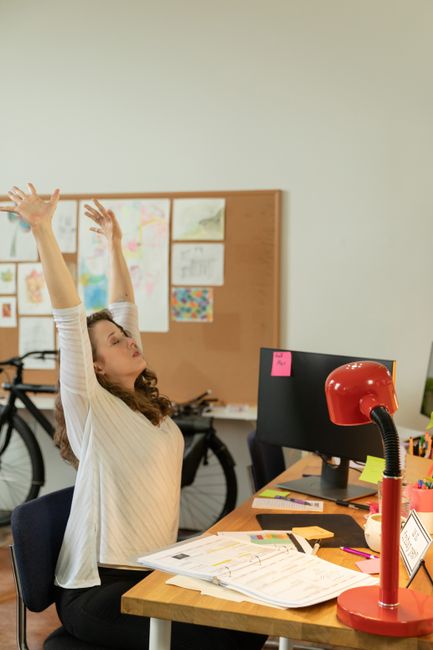
Prolonged typing and mouse usage often lead to a rounded shoulder posture, commonly referred to as "tech neck" or "hunched back." This position compresses the chest cavity, which can actually decrease your lung capacity and reduce the amount of oxygen reaching your brain. The desk-side chest opener is one of the most critical desk drills for maintaining an open, healthy posture and improving respiratory function.
To execute this stretch, stand up or sit at the very edge of your chair. Reach your arms behind your back and interlace your fingers. Gently pull your shoulders back and down while lifting your chest toward the ceiling. If you cannot reach your hands together, simply grasp the back of your chair and lean forward slightly. Hold this position for 30 seconds while taking deep, diaphragmatic breaths. You should feel a significant release in the pectoral muscles and the front of the shoulders.
Regularly performing this drill prevents the shortening of the chest muscles that occurs when we lean toward our screens. By opening the chest, you also encourage a neutral spine, which reduces the strain on the small muscles of the neck. This not only improves your physical health but also boosts your confidence and energy levels, as an upright posture is linked to lower levels of cortisol and higher levels of testosterone.
4. Standing Calf Raises for Venous Return
Your calf muscles are often referred to as the "second heart" of the body. This is because they play a vital role in the circulatory system by pumping venous blood from the lower extremities back up to the heart against the force of gravity. When you sit still, this "pump" is inactive, which is why many office workers experience swollen ankles or heavy legs by the end of the day.
Standing calf raises are a powerful tool in your arsenal of desk drills. Stand behind your chair and use the backrest for balance. Slowly rise onto the balls of your feet, hold for a second at the peak of the contraction, and then slowly lower your heels back to the floor. Perform three sets of 20 repetitions. This simple action immediately stimulates blood flow and helps clear metabolic waste products that have accumulated in your lower legs during periods of stillness.
Beyond circulation, calf raises help maintain ankle mobility and balance. Keeping your ankles flexible is essential for preventing falls and maintaining a healthy gait. If you have a standing desk, you can perform these throughout the day while you work. If not, making it a habit to stand up and do 20 raises every time you finish a phone call can make a massive difference in your daily activity levels and heart health.
5. Seated Spinal Twists for Disc Health
The human spine is designed for movement, specifically rotation. However, when we sit at a desk, our spines remain locked in a static, forward-facing position. This lack of movement prevents the spinal discs from receiving the nutrients they need. Because discs do not have a direct blood supply, they rely on a process called "imbibition," which is the mechanical pumping of fluids in and out of the disc through movement.
Seated spinal twists are essential desk drills for keeping your back supple and pain-free. Sit tall with your feet flat on the floor. Place your right hand on the outside of your left knee and your left hand on the back of your chair. Gently inhale to lengthen your spine, and as you exhale, twist your torso to the left, looking over your left shoulder. Hold for 15 seconds and repeat on the other side. Ensure the twist comes from your mid-back (the thoracic spine) rather than your lower back.
Performing these twists twice a day helps maintain the integrity of your spinal column. It relieves the pressure that builds up in the vertebrae and helps prevent the stiffness that leads to chronic back pain. Furthermore, twisting movements can stimulate the digestive system, which often becomes sluggish during long periods of sitting, helping you avoid that mid-afternoon bloated feeling.
6. Optimizing Your Workstation Ergonomics
While movement is the primary cure for sitting disease, the environment in which you sit must also be optimized. Even the best desk drills cannot fully compensate for a workstation that forces your body into unnatural positions. Ergonomics is the science of fitting the workspace to the user, and small adjustments can lead to significant improvements in your long-term spinal health and comfort.
Start with your chair height; your hips should be slightly higher than your knees, with your feet flat on the floor. This creates a "neutral pelvis" and prevents the lower back from rounding. Your monitor should be positioned so that the top third of the screen is at eye level. This prevents you from tilting your head down, which can add up to 60 pounds of pressure on your cervical spine. Finally, your elbows should be at a 90-degree angle, with your wrists resting in a neutral position to prevent carpal tunnel syndrome.
Ergonomic Checklist:
- Monitor Distance: About an arm's length away.
- Keyboard Position: Close enough so your elbows stay by your sides.
- Lumbar Support: Use a small pillow if your chair doesn't support the curve of your lower back.
- Lighting: Ensure there is no glare on the screen to prevent eye strain and forward leaning.
By combining a well-set-up desk with regular movement, you create a sustainable environment for your body. Ergonomics provides the foundation of support, while the desk drills provide the necessary biological stimulus to keep your systems running efficiently.
7. Desk Push-Ups for Metabolic Activation

If you have a moment of privacy or work in a flexible office environment, desk push-ups are one of the most effective ways to spike your heart rate and engage your entire upper body. This movement is a step up from simple stretching and moves into the realm of functional strength, which is vital for maintaining metabolic health as we age.
To perform a desk push-up, ensure your desk is sturdy and won't slide. Place your hands on the edge of the desk slightly wider than shoulder-width apart. Step your feet back until your body forms a straight line from head to heels. Lower your chest toward the desk by bending your elbows, then push back to the starting position. Aim for 10 to 15 repetitions. This drill engages the chest, shoulders, triceps, and core muscles simultaneously.
The beauty of this exercise is its efficiency. It requires significant muscle recruitment, which triggers a localized demand for energy. This helps clear glucose from the blood and improves insulin sensitivity. Additionally, the weight-bearing nature of the exercise helps maintain bone density in the wrists and arms, which is a key component of overall longevity and health.
8. Bonus: The Power of NEAT and Fidgeting
Beyond structured desk drills, there is a concept known as NEAT, or Non-Exercise Activity Thermogenesis. This refers to the energy expended for everything we do that is not sleeping, eating, or sports-like exercise. Interestingly, individuals who naturally "fidget"—tapping their feet, pacing while on the phone, or shifting positions frequently—can burn up to 300-500 more calories per day than those who stay perfectly still.
To maximize your health in the office, embrace the art of the micro-movement. Never stay in one position for more than 30 minutes. If you are on a phone call, stand up and pace. If you are reading a long document, try doing it while standing. Use a smaller water glass so you have to walk to the kitchen or cooler more often. These tiny, almost imperceptible actions accumulate over the course of a week, significantly reducing the impact of sitting disease on your body.
Conclusion
Combating sitting disease does not require a gym membership or an hour of high-intensity training during your lunch break. Instead, it requires a shift in perspective: viewing your workday as a series of opportunities for movement rather than a period of physical stagnation. By implementing these 5-minute desk drills and optimizing your ergonomics, you protect your heart, your spine, and your metabolic health.
Start small by choosing just two of these drills to perform today. As they become habitual, add more until movement becomes a natural part of your professional routine. Your body is designed to move; by honoring that design, you will find yourself with more energy, less pain, and a significantly lower risk of chronic disease. Take the first step now—stand up, stretch, and reclaim your health from the chair.