Understanding Functional Longevity: Why Your Workout Isn’t Enough

When we think about fitness, we often visualize heavy weights, high-intensity intervals, and aesthetic goals. However, the true measure of health isn't just how much you can bench press today, but how well you can move thirty years from now. This concept is known as functional longevity—the ability to maintain physical independence and metabolic health throughout the aging process. Achieving functional longevity requires a shift in perspective from short-term performance to long-term sustainability.
While a one-hour gym session is beneficial, it represents only a small fraction of your day. Research suggests that the remaining 23 hours play a more significant role in your overall health markers than previously thought. In this tutorial, we will explore five essential daily habits that go beyond the gym to preserve your mobility, heart health, and mitochondrial efficiency.
Learning Objectives for This Tutorial
- Understand the science of Non-Exercise Activity Thermogenesis (NEAT) and its impact on metabolism.
- Master essential ground-to-standing mobility drills to maintain joint health.
- Recognize the link between grip strength and cardiovascular mortality.
- Learn how to implement "movement snacks" to break up sedentary behavior.
- Identify the benefits of Zone 2 cardio for mitochondrial health and recovery.
1. Optimize Your NEAT: The Science of Non-Exercise Activity
The first pillar of functional longevity is maximizing your Non-Exercise Activity Thermogenesis, or NEAT. NEAT encompasses all the energy we expend through everything we do that is not sleeping, eating, or sports-like exercise. This includes walking to your car, typing, performing yard work, or even fidgeting.
Why does NEAT matter more than your workout hour? For the average person, structured exercise accounts for only about 5% of total daily energy expenditure. In contrast, NEAT can account for 15% to 50% depending on your lifestyle. High levels of NEAT are associated with lower risks of obesity, metabolic syndrome, and cardiovascular disease.
How to Increase Your Daily NEAT
To improve your metabolic health, focus on "active living" rather than just "exercise sessions." Here are practical ways to integrate more movement:
- Pace while on calls: Never sit during a phone conversation; use that time to walk around the room.
- Choose the long way: Take the stairs instead of the elevator and park at the back of the lot.
- Household chores: Gardening, vacuuming, and DIY projects are powerful contributors to NEAT.
Pro Tip: Use a pedometer or smartwatch to track your steps. Aiming for 8,000 to 10,000 steps a day is a baseline for maintaining metabolic flexibility and functional longevity.
2. Ground-to-Standing Mobility: The Vitality Drill
One of the most significant indicators of long-term health is your ability to get up from the floor without assistance. This is often referred to as the "Sitting-Rising Test" (SRT). Studies have shown that individuals who can move from the floor to a standing position with minimal use of their hands have a lower risk of all-cause mortality. This movement requires a combination of core strength, balance, and hip mobility.
Tutorial: The Shin Box to Half-Kneeling Drill
This drill is essential for maintaining the hip internal and external rotation required for independent movement as you age.
- The Setup: Sit on the floor with your knees bent. Drop both knees to the right side so your right shin is in front of you and your left shin is to your side (forming 90-degree angles at both knees). This is the "Shin Box" position.
- The Lift: Without using your hands, drive your hips upward until you are kneeling on both knees. Squeeze your glutes at the top.
- The Transition: Step your left foot forward into a half-kneeling lunge position.
- The Stand: Drive through your front heel to stand up completely.
- The Reverse: Slowly lower yourself back down to the floor in the exact reverse order.
Practice Exercise
Commit to spending 5 minutes on the floor every evening while watching TV. Practice moving from sitting to standing five times on each side. If you need to use your hands initially, that is fine—your goal is to eventually perform the movement hands-free.
3. The Grip Strength Connection to Cardiovascular Health
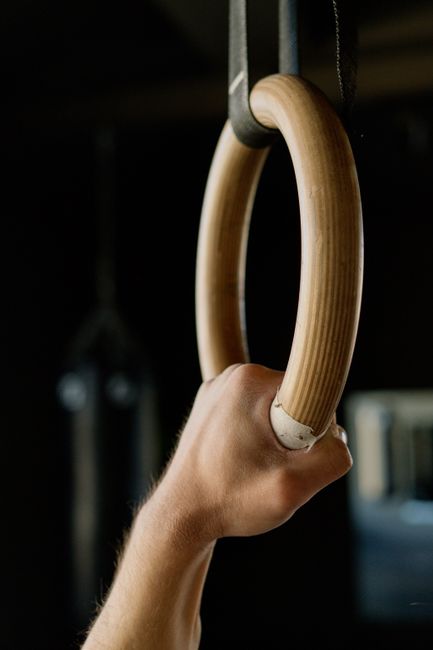
It may seem surprising, but the strength of your handgrip is a powerful biological marker for aging. Clinical studies, including the PURE study, have demonstrated that grip strength is a stronger predictor of cardiovascular mortality than systolic blood pressure. Weak grip strength is often a proxy for sarcopenia (muscle wasting) and general physical frailty.
Why Grip Strength Matters
Grip strength is an indicator of total body muscular integrity. As we age, maintaining muscle mass is vital for protecting our organs and ensuring metabolic health. Furthermore, a strong grip allows you to perform daily tasks—like carrying groceries or opening jars—that are essential for living independently.
How to Build Grip Strength for Longevity
- Dead Hangs: Find a pull-up bar and simply hang for as long as you can. Aim for three sets of 30 seconds. This also decompresses the spine and improves shoulder health.
- Farmer’s Carries: Hold a heavy weight (kettlebell, dumbbell, or even a heavy grocery bag) in each hand and walk for 50-100 feet. Focus on maintaining an upright posture.
- Plate Pinches: Hold a weight plate between your thumb and fingers (not using your palm) and hold for time.
4. Implementing 'Movement Snacks' for Sedentary Work
Modern work environments are often the enemy of functional longevity. Sitting for prolonged periods causes hip flexors to shorten, glutes to become inactive (gluteal amnesia), and the thoracic spine to round. This leads to chronic back pain and reduced mobility over time. To combat this, we recommend "movement snacks."
What is a Movement Snack?
A movement snack is a short burst of physical activity—lasting 1 to 2 minutes—performed every 30 to 60 minutes of sedentary work. These snacks help reset your posture, stimulate blood flow, and clear glucose from the bloodstream.
Sample Movement Snack Menu
Choose one of the following every hour:
- 15 Air Squats: Focus on depth and keeping your chest up to engage the lower body.
- Desk Push-ups: Place your hands on the edge of a sturdy desk and perform 10 repetitions to engage the upper body and core.
- Doorway Chest Stretch: Stand in a doorway and place your arms on the frame to stretch the pectorals and counteract "office slouch."
- Calf Raises: Perform 20 standing calf raises to pump blood back up from the lower extremities.
Implementation Tip: Set a recurring timer on your computer or phone. When the timer goes off, perform your chosen "snack" immediately before returning to work.
5. Prioritizing Zone 2 Cardio for Mitochondrial Efficiency
While high-intensity interval training (HIIT) gets all the glory, Zone 2 cardio is the secret weapon for functional longevity. Zone 2 is low-intensity, steady-state aerobic exercise where you are working at roughly 60-70% of your maximum heart rate. At this intensity, your body primarily uses fat as fuel and maximizes mitochondrial biogenesis.
The Mitochondrial Benefit
Mitochondria are the powerhouses of your cells. As we age, mitochondrial function tends to decline, leading to fatigue and metabolic diseases. Zone 2 training increases the number and efficiency of mitochondria, which improves your ability to recover from stress and maintains your aerobic base for years to come.
How to Identify Zone 2
You don't necessarily need a heart rate monitor to find your Zone 2. Use the "Talk Test": You should be able to carry on a full conversation, but it should be slightly uncomfortable. If you are gasping for air, you are in Zone 3 or higher. If you can sing a song easily, you are in Zone 1.
Training Recommendations
- Frequency: Aim for 150 to 180 minutes of Zone 2 activity per week.
- Modality: Brisk walking, light cycling, or swimming are excellent choices.
- Consistency: These sessions should be steady and rhythmic, lasting at least 30-45 minutes each for maximum mitochondrial benefit.
Next Steps: Building Your Longevity Routine

Transitioning from an aesthetics-only fitness mindset to a functional longevity framework is a journey, not a sprint. To begin, don't try to change everything at once. Start with one habit this week—perhaps the movement snacks—and gradually layer in the others.
A Sample Daily Longevity Schedule
- Morning: 10 minutes of ground-to-standing mobility drills to wake up the joints.
- Workday: Set a timer for hourly movement snacks (squats or stretches).
- Lunch: A 20-minute brisk walk (Zone 2) to increase NEAT and clear your head.
- Evening: Practice grip strength with a 60-second dead hang or heavy carries.
- Weekend: Dedicate 60 minutes to a long Zone 2 hike or bike ride.
By focusing on these sustainable, daily movements, you are investing in your future self. You aren't just training for a better reflection in the mirror; you are training for the freedom to move, explore, and remain independent for the rest of your life.